
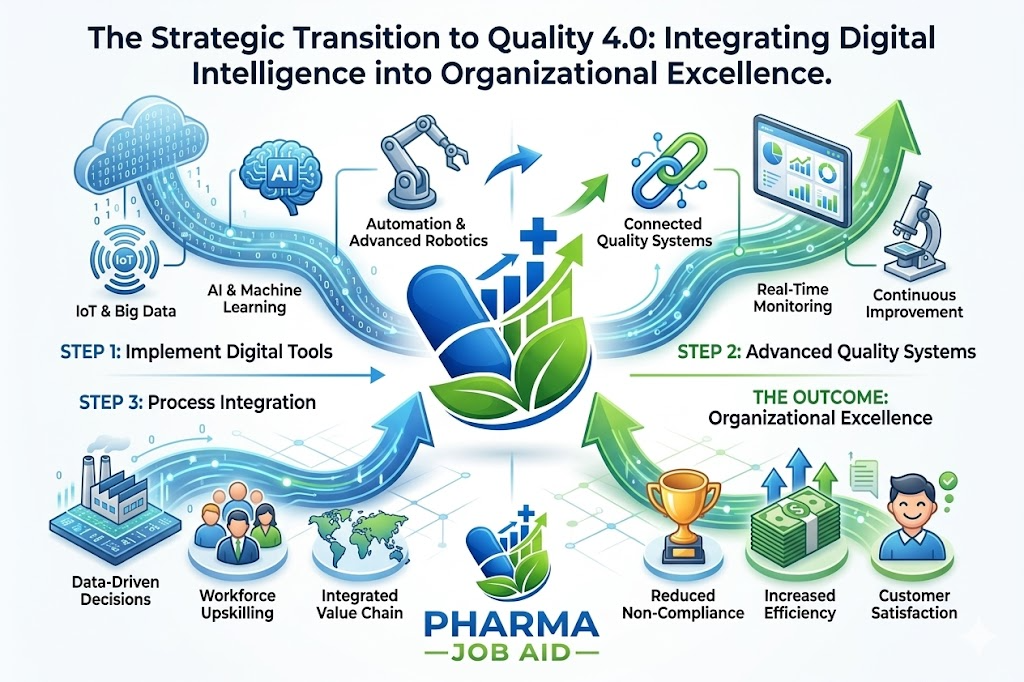
The global industrial landscape is presently navigating a foundational transformation, shifting from traditional quality management paradigms to a digitized, interconnected framework known as Quality 4.0. This evolution represents the alignment of quality management practices with the technological advancements of the Fourth Industrial Revolution, or Industry 4.0. Quality 4.0 is not merely a technological upgrade; it is a holistic strategy that leverages emerging digital tools and Industrial Transformation (IX) methodologies to achieve step-change improvements across the entire value chain, from product development and supplier management to operations and customer experience. While traditional quality management systems focused on reactive controls and continuous improvement methodologies like Lean and Six Sigma, Quality 4.0 utilizes pervasive connectivity, advanced analytics, and cyber-physical systems to foster a proactive, predictive, and highly collaborative environment.
Historical Context and the Genesis of the Fourth Quality Revolution
The trajectory of quality management has historically mirrored the progress of industrial technology. The first real industrial revolution integrated machine manufacturing and steam power; subsequent eras introduced mass production and the digitalization of logic through computers. The current era, Industry 4.0, is characterized by rapid advances in connectivity, mobility, analytics, and data scalability. Within this context, Quality 4.0 has emerged as a critical subset of industrial transformation, focusing on how these technologies can redefine organizational excellence.
Prior to this shift, systems often referred to as Quality 3.0 relied on batch certification, paper-based documentation, and extensive final-product testing. These methods, while effective for basic compliance, are inherently time-consuming and reactive, frequently failing to detect deviations until after production is complete, which leads to costly scrap or rework. Quality 4.0 seeks to bridge the gap between these legacy processes and the demands of modern manufacturing by embedding real-time insights into every stage of the product lifecycle.
| Industrial Era | Quality Paradigm | Core Characteristics | Primary Technologies |
|---|---|---|---|
| Industry 1.0 | Inspection | Manual checks of final products | Mechanical tools, basic measurement |
| Industry 2.0 | Quality Control | Statistical sampling, process focus | Mass production, electrical power |
| Industry 3.0 | Quality Assurance | Systems-based approach, ISO standards | Computers, PLCs, software systems |
| Industry 4.0 | Quality 4.0 | Predictive, integrated, proactive | AI, ML, IIoT, Cloud, Big Data |
Conceptualizing Quality 4.0: The LNS Research Framework and the Eleven Axes
The concept of Quality 4.0, pioneered by LNS Research, is defined by eleven specific axes that organizations utilize to plan, educate, and act. These axes provide a multidimensional view that extends beyond technology to include people and processes.
Connectivity and System Integration
Connectivity serves as the foundational requirement for Quality 4.0. It involves the integration of Information Technology (IT) and Operational Technology (OT), allowing for the seamless flow of data between machines, products, and enterprise systems. Through the Industrial Internet of Things (IIoT), organizations gain real-time visibility into manufacturing performance and customer service metrics. This connectivity eliminates the silos that characterized previous quality eras, where quality teams often worked independently with minimal cross-functional ownership.
Advanced Analytics and Big Data
Traditional quality metrics have historically been descriptive, answering “what happened” through retrospective reports. Quality 4.0 shifts this focus toward predictive and prescriptive analytics. By managing “Big Data”—datasets whose size and speed exceed the capacity of traditional relational databases—organizations can identify complex causal relationships and forecast potential quality failures. This allows for the discovery of root causes through data aggregation and real-time pipelines that were previously invisible to human operators.
Management Systems and Automated Compliance
Quality 4.0 involves the digitalization of management systems and compliance frameworks. In highly regulated environments, such as pharmaceutical manufacturing, moving from manual, paper-based documentation to electronic Quality Management Systems (eQMS) can reduce deviation rates by up to 80%. Automated activities, such as real-time process monitoring and cloud-based audit management, ensure that compliance is a continuous outcome rather than a periodic event.
The Human Element: Culture, Leadership, and Collaboration
A common misconception is that Quality 4.0 is solely a technological story. However, it is fundamentally about how technology improves the human aspects of quality: culture, collaboration, competency, and leadership. Leadership in a Quality 4.0 environment requires a clear vision that aligns digital quality objectives with overall corporate strategy. Culture must transition toward an agile, collaborative model where everyone takes ownership of quality, supported by social collaboration tools that share best practices across global divisions.
| Pillar | Quality 4.0 Impact | Operational Shift |
|---|---|---|
| People | From Enforcers to Navigators | Quality professionals guide transformation rather than just auditing rules. |
| Process | Real-time and Automated | Moving from manual batch reviews to automated, real-time validation. |
| Technology | Disruptive Enablers | AI, IoT, and Cloud serve as the infrastructure for excellence. |
Technological Catalysts: The Mechanism of Digital Interconnectivity
The transition to Quality 4.0 is enabled by a suite of digital technologies that transform how quality data is captured, analyzed, and acted upon.
Artificial Intelligence and Machine Learning in Quality Loops
Artificial Intelligence (AI) and Machine Learning (ML) are central to the intelligent manufacturing era. AI algorithms impart problem-solving and decision-making skills to machines, allowing them to perform tasks such as computer vision for defect detection and text analysis for identifying trends in customer complaints. Machine learning specifically excels at finding “process levers”—the specific variables that, when adjusted, ensure organizational consistency and minimize variation. Research highlights the application of various AI-driven algorithms, such as k-Nearest Neighbors (k-NN), Artificial Neural Networks (ANN), and Convolutional Neural Networks (CNN), in the fault diagnostics of rotating machinery, which drastically reduces downtime and safety risks.
The Industrial Internet of Things and Sensors
The IIoT consists of sensors and devices that collect data such as vibration, temperature, and electrical current in real-time. This continuous data flow provides a “window” into the production process, enabling the detection of flaws at the source. In advanced facilities, IIoT devices communicate with each other to self-optimize, adjusting parameters automatically when deviations are detected.
Digital Twins and Simulation Modeling
Digital Twins (DT) are virtual models that maintain a real-time, bidirectional link with their physical counterparts. Unlike traditional simulations, DTs allow manufacturers to monitor and control processes virtually, testing changes in a digital environment before implementing them on the physical factory floor. This capability promotes evidence-based quality by providing constant support for decision-making through high-fidelity modeling.
Blockchain for Traceability and Data Integrity
Blockchain technology offers a decentralized and immutable ledger for tracking product quality throughout the value chain. In industries where traceability is paramount, blockchain ensures that every transaction and quality check is verified and transparent, reducing the risk of data manipulation and increasing trust between suppliers and manufacturers.
Augmented and Virtual Reality (AR/VR)
AR and VR applications are becoming integral to increasing connectivity and competency. These tools can be used for virtual inspections, remote audits, and immersive training, allowing workers to access instructions and troubleshooting manuals via smart glasses while their hands remain on the product.
Transitioning the Legacy Quality Management System: Strategic Roadmaps and Readiness
The movement toward Quality 4.0 is a long-term, complex project that must be properly planned and implemented as part of a broader digital transformation strategy. Research indicates that organizations often face significant hurdles, including high implementation costs, a shortage of skilled labor, and resistance to change.
The Six Sequential Phases of Transition
A general roadmap for transitioning to Quality 4.0 involves six sequential phases designed to guide organizations from their current state to advanced digital maturity :
- Assessing Readiness Level: This initial phase involves evaluating the organization’s Industry 4.0 maturity, the stability of its current data flows, and its adherence to relevant standards.
- Setting Up: Organizations must align their quality strategy with broader Industry 4.0 goals, developing business cases and securing executive support.
- Involving Stakeholders and Systems: This stage focuses on human integration—addressing changes in roles and competencies—while improving the interoperability of systems between the manufacturer, its suppliers, and its customers.
- Finding New Ways to Deliver Insights: This phase emphasizes the discovery of innovative methods to provide the data-driven insights necessary for operational improvement.
- Creating Value: Value creation is an ongoing process that should be realized at every stage of the transition.
- Managing Data: The final phase requires establishing the robust infrastructure needed for data administration and the real-time flow of information.
Dimensions of Organizational Readiness
To successfully navigate these phases, organizations must evaluate their readiness across four primary dimensions:
- Governance: The management and oversight structures necessary to lead the digital transformation.
- Guarantee and Quality Assurance: The degree to which digital tools are used to ensure product standards.
- Learning and Improvement: The organization’s capacity to evolve through the use of data-driven insights.
- Technologies 4.0 Context: The level of adoption of the ten core enabling technologies, including AI, Cloud Computing, and IIoT.
The Human Dimension: Cultural Metamorphosis and Professional Evolution
The most critical factor in a successful Quality 4.0 transition is the people. As automation and AI take over repetitive tasks and data collection, the role of the quality professional must evolve from a focus on enforcing rules to a role of navigating digital disruption.
The Quality Professional 4.0: From Enforcer to Navigator
Quality professionals are uniquely positioned to lead digital transformation because they understand the interconnectedness of organizational platforms. In the Quality 4.0 era, they must develop “systems thinking” and “data-driven decision-making” skills. This involves moving away from traditional data analyst roles into “data wrangler” positions, where they manage heterogeneous datasets to find meaningful patterns and predictors.
| Traditional Role (Quality 3.0) | Evolved Role (Quality 4.0) | Core Competency Change |
|---|---|---|
| Rule Enforcer | Digital Navigator | From auditing against static lists to guiding through disruption. |
| Manual Data Analyst | Data Management Specialist | From simple calculations to “data wrangling” complex AI outputs. |
| Process Controller | System Designer Support | From monitoring operators to supporting self-regulating machines. |
| Departmental Silo | Strategic Leader | From isolated quality checks to strategic enterprise link. |
Closing the Skill Gap
Addressing the workforce barrier is paramount. Existing employees often lack the digital competencies required to operate AI-driven or data-heavy systems. Organizations must implement upskilling programs that focus not only on technical skills—like data science and AI—but also on change management and digital communication. Establishing multidisciplinary teams that combine quality expertise with data science and IT knowledge is a proven best practice for mitigating these skill gaps.
Sector-Specific Transformations: Pharmaceutical and Life Sciences
The pharmaceutical industry, characterized by stringent regulatory requirements and the high cost of failure, has much to gain from Quality 4.0. Digital transformation in this sector—often called Pharma 4.0—focuses on reducing operational costs, time-to-market, and compliance risks through the implementation of advanced technologies.
Real-Time Quality by Design (QbD)
Traditional pharmaceutical quality relies on “Quality by Testing,” where products are certified based on final batch testing. Quality 4.0 enables “Quality by Design” (QbD) and Process Analytical Technology (PAT), where in-line sensors and AI tools keep production “right the first time” by monitoring critical process parameters in real-time. This shift allows for “review by exception,” where only deviations require human intervention, dramatically speeding up release times.
Economic Impact and ROI in Pharma
The financial benefits of Quality 4.0 in pharma are significant. By 2026, real-world reports project productivity boosts of 50−100% in quality labs through automation and capacity increases of 25−40% in plants utilizing digital twins.
| Process Area | Projected Cost/Time Reduction | Technology Enabler |
|---|---|---|
| Deviation and CAPA Rates | 65−80% reduction | AI-driven root cause analysis. |
| Lab Lead Times | >60% reduction | eQMS and automated documentation. |
| Investigation Closure Times | 90% faster | Digital workflows and real-time data. |
| Batch Review Time | 70−90% reduction | Electronic batch records (eBR). |
| Documentation Handling Costs | 75% reduction | Transition from paper to eDMS. |
Additionally, the “Cost of Poor Quality” (CoPQ) in pharma is astronomical. A single documentation error can cost between $5,000 and $10,000, and large-scale recalls can exceed $100 million. Since over 60% of FDA warning letters cite documentation failures, the automation of these tasks—eliminating up to 80% of manual work—serves as a powerful risk mitigation tool.
Automotive Excellence: Case Studies of Advanced Integration
The automotive industry has been a leader in the practical application of AI and IIoT for quality control, with companies like BMW setting the benchmark for the “intelligently connected factory”.
BMW Group: The AIQX Platform and Predictive Maintenance
Since 2019, BMW has integrated AI into its global production network through its custom AIQX (Artificial Intelligence Quality Next) platform. This platform uses sensor technology and 26 high-resolution cameras on the factory floor to capture images as vehicles move down the line. AI algorithms analyze this data in real-time to identify assembly errors that are “not humanly possible” to achieve manually.
BMW’s predictive maintenance strategy has also yielded significant benefits. By monitoring parameters like temperature and vibration on welding guns and conveyor systems, the company anticipates equipment failures before they disrupt production. This transition from rule-based to predictive maintenance has reduced unplanned downtime and repair costs while promoting sustainability by preventing over-maintenance.
Siemens AG: Quantifying the Digital Dividend
A comprehensive study of Siemens AG’s digital transformation between 2021 and 2023 demonstrates the tangible link between digital investment and quality outcomes. By integrating AI, ML, and real-time data analytics, Siemens achieved a significant reduction in defect rates and a boost in customer loyalty.
| Metric | 2021 | 2023 | Industry Average (2022) |
|---|---|---|---|
| Defect Rate | 15% | 10% | 12% |
| Net Promoter Score (NPS) | 70 | 80 | N/A |
| Product Traceability | Baseline | +30% | N/A |
| Production Errors | Baseline | −20% | N/A |
Note: Siemens’ performance metrics indicate that a 1% increase in digital investment resulted in a 0.5% improvement in quality performance (β=0.50,p<0.01).
Siemens’ implementation of the MindSphere platform for real-time monitoring and predictive maintenance optimized quality outcomes and reduced operational risks. These back-end quality improvements also strengthened the company’s brand, as sales teams could present validated quality data to customers, leading to higher closing rates and shorter sales cycles.
Economic Rationale: ROI, Cost of Poor Quality, and Operational Efficiency
The move toward Quality 4.0 is driven by compelling financial incentives. Organizations reported a wide range of operational improvements following their transition.
Broad Industry ROI Benchmarks
Research across various manufacturing sectors shows that Quality 4.0 transitioners experience substantial gains in efficiency and cost reduction.
| Operational Benefit | Percentage of Respondents Reporting Improvement |
|---|---|
| Increased Efficiency | 60.0% |
| Quality and Compliance Gains | 56.5% |
| Time Savings | >50.0% |
| Cost Savings | >50.0% |
| Productivity Increase | 38.5% |
| Complexity Reduction | 29.7% |
| Risk Mitigation | >20.0% |
| Business Transformation | >20.0% |
| Sustainability Improvements | >14.0% |
Note: Data reflects improvements reported by organizations adopting digital quality tools.
Mitigating the Cost of Poor Quality
Quality 4.0 allows organizations to move from manual, reactive checks to automated, predictive monitoring, which directly impacts the bottom line by reducing the costs associated with failures. For example, AI-driven automated inspection systems can inspect 100% of units with over 98% accuracy, virtually eliminating the possibility of defective products reaching the customer and preventing the catastrophic costs of large-scale recalls.
Navigating Impediments: Technological, Organizational, and Workforce Barriers
Despite the clear benefits, only 16% of organizations have started integrating digital tools for Quality 4.0. The barriers to adoption are multifaceted, spanning technological, organizational, and economic domains.
Technological Barriers and Mitigation Strategies
Many organizations are hampered by legacy systems, such as outdated SPC platforms, and poor interoperability between new tools and existing infrastructure. To mitigate these risks, leaders should adopt standardized interoperability frameworks and utilize cloud-based platforms to facilitate distributed data access. Phased implementation—starting with small pilot projects before a full-scale rollout—is recommended to demonstrate value and ensure practical applicability.
Organizational and Cultural Resistance
Rigid, hierarchical cultures and resistance to change among traditional quality roles are significant hurdles. Leadership must drive change from the top to create the credibility and momentum necessary for a successful program. Fostering a “culture of innovation” where employees are empowered to take ownership of quality—supported by gamification and rewards for improvement—can reduce resistance and build confidence in new technologies.
Data and Security Concerns
Concerns about data security and cybersecurity are primary deterrents to digital adoption. As factories become more connected, the risk of cyberattacks increases. Establishing robust data governance and cybersecurity measures is essential. Research shows that while most manufacturers prioritize cybersecurity and automation, they often neglect foundational elements like blockchain or AR, which are necessary for long-term scalability.
Sustainability and the Future: Moving Toward Industry 5.0 and Quality 5.0
While Quality 4.0 focuses on the integration of digital technology for efficiency and performance, the industry is already looking toward Quality 5.0. This incipient shift emphasizes a more “people-centered” concept and environmental sustainability, moving beyond purely technical gains toward the United Nations Sustainable Development Goals (SDGs).
Industry 4.0 provided the bridge between the physical and digital worlds; Industry 5.0 seeks to integrate this digital power with a human-centric focus on societal well-being. In this future state, quality management will not only ensure product excellence but also monitor energy and water preservation, resource efficiency, and the social impact of digital decisions on communities.
Conclusions and Actionable Strategic Imperatives
The transition to Quality 4.0 is no longer a matter of debate but a prerequisite for organizational survival in the era of digital disruption. By aligning quality management with the technologies of Industry 4.0, organizations can move from reactive, siloed functions to proactive, integrated ecosystems that deliver step-change improvements in value.
The analysis of current leaders—such as BMW, Siemens, and Johnson & Johnson—reveals that successful transitions are those that treat Quality 4.0 not just as a technology project, but as a holistic transformation of people, processes, and culture. The role of the quality professional must be elevated to that of a strategic “navigator,” equipped with the systems thinking and data science skills necessary to guide the organization toward excellence.
To achieve these results, organizations should:
- Conduct a thorough readiness assessment to identify maturity gaps in data flows and governance.
- Establish an executive-level quality leader to champion the transformation and align it with corporate strategy.
- Invest in upskilling the workforce to bridge the digital competency gap.
- Implement a “test and learn” approach, using pilot projects to validate ROI before scaling solutions across the enterprise.
- Prioritize data integrity and cybersecurity to ensure the long-term reliability of digitized quality systems.
Ultimately, Quality 4.0 is a continuous journey. It builds on the foundations of traditional quality while leveraging the power of digital connectivity to ensure that excellence is not just a goal, but a predictable, real-time reality across the global value chain. Those who embrace this transformation today will be the navigators of the industrial landscape of tomorrow
- .asq.orgQuality 4-0 | ASQOpens in a new window
- sas.comQUALITY 4.0 IMPACT AND STRATEGY HANDBOOK – SASOpens in a new windowblog.lnsresearch.comWhat is Quality 4.0? And What It Isn’t. – LNS Research BlogOpens in a new windowtdwi.orgLNS Research: Quality 4.0 Impact and Strategy Handbook – TDWIOpens in a new windowpinnaql.comQuality 4.0 Transition: What You Need & How – PinnaqlOpens in a new windowblog.lnsresearch.comQuality 4.0 eBook – LNS Research BlogOpens in a new windowintuitionlabs.aiQuality 4.0 in Pharma: A 2026 ROI & Economic Analysis | IntuitionLabsOpens in a new windowfanruan.comUnderstanding Quality 4.0 and Its Core ConceptsOpens in a new windowtandfonline.comQuality 4.0: technologies and readiness factors in the entire value …
- Opens in a new windowinterfacing.comIs Quality 4.0 the Future of Quality? It is, and Here’s Why. – InterfacingOpens in a new windowquality40.uek.krakow.plIntroduction to Quality 4.0Opens in a new windowemerald.comQuality 4.0: adoption approaches and future directions | International …Opens in a new windowintuitionlabs.aiQuality by Design (QbD) & PAT in Pharma Manufacturing – IntuitionLabsOpens in a new windowmatec-conferences.orgTheoretical overview of Quality 4.0 – MATEC Web of ConferencesOpens in a new windowpmc.ncbi.nlm.nih.govIndustry 5.0 or industry 4.0S? Introduction to industry 4.0 and a peek into the prospective industry 5.0 technologies – PMCOpens in a new windowimaintain.ukBMW Group’s Success with Predictive Maintenance: A Case Study – iMaintainOpens in a new windowsiemens.comSupercharge your digital transformation | SiemensOpens in a new windowassemblymag.comIndustry 4.0 and the Automotive Industry | 2021-08-20 – Assembly MagazineOpens in a new windowsiemens-advanta.comDigital Transformation – Siemens AdvantaOpens in a new windowemerald.comPharma industry 4.0 deployment and readiness: a case study within a manufacturer | The TQM Journal | Emerald PublishingOpens in a new windowmdpi.comAn Overview of the Transformation Towards Quality 4.0: Technological Needs, Challenges, and Benefits – MDPIOpens in a new windowmastercontrol.comQuality 4.0 for Quality Leaders and LNS Research – MasterControlOpens in a new windowpress.bmwgroup.comArtificial intelligence as a quality booster – BMW Group PressClubOpens in a new window5dvision.comCase Study: BMW’s AI-Powered Manufacturing Transformation – 5D …Opens in a new windowresearchgate.net(PDF) Digital transformation for quality management, operational …Opens in a new windowsiemens.comDigital Transformation Strategy | SiemensOpens in a new windowmdpi.comQuality 4.0: The EFQM 2020 Model and Industry 4.0 Relationships and Implications – MDPIOpens in a new windowpmc.ncbi.nlm.nih.govA comprehensive study on Industry 4.0 in the pharmaceutical industry for su