
Eid-ul-Adha is full of festivities; however, the increased intake of red meat (beef or mutton) will put considerable stress on your digestion process. The fact is that red meat is rich in proteins and saturated fats, which means it takes more time to digest. If not taken in moderation, it might lead to stomach problems such as indigestion or even hypertension.
So here is a simple guide for consuming your Qurbani gosto without compromising your digestion.
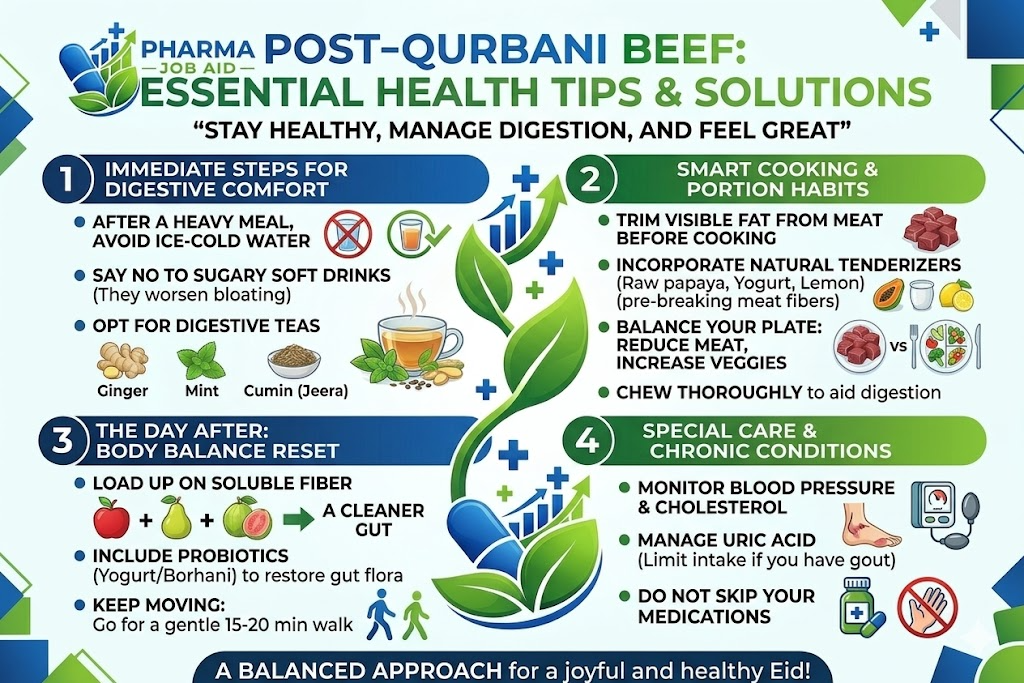
1. Immediate Post-Meal Recovery
The Eid-ul-Adha festival marks a lot of joy and happiness but the sudden upsurge in the consumption of red meat (i.e., beef and mutton) may become quite difficult for your body to bear. The reason behind this problem is that the red meat contains high amounts of proteins and fats which take more time to digest. Due to this, it causes some problems such as indigestion, bloating, or high blood pressure in many people.
In order to make you feel comfortable after having Qurbani gosto during the celebration period, here are some tips which will help you have the tasty and nutritious food without any health issues.
Don’t Take Ice-Cold Water:
Taking ice-cold water soon after having a fatty and rich meat meal makes your fats stiff inside the stomach because it causes the fats to harden.
Avoid Sugary Soft Drinks:
It is believed that drinking soft drinks helps digest the meal easily but it actually causes the issue of acid reflux along with bloating.
Make Digestive Tea:
Drink herbal teas such as ginger, mint, or jeera (cumin).

2. Smart Eating & Portion Habits
It doesn’t mean you can’t join the party; rather, slight changes in the way you eat will bring significant benefits.
Be Aware of Portions:
You should limit your portion of red meat to 100-150 grams. You will need to balance your plate with some veggies such as cucumbers, tomatoes, or any other light vegetable side dish.
Eat Your Meat Slowly:
The digestion process starts in the mouth. Red meat contains a lot of fibers that need to be broken down for proper digestion. That’s why it’s advisable to chew your food thoroughly.
Don’t Eat Late at Night:
Don’t eat beef or mutton dishes late at night. It’s preferable to eat 2-3 hours before going to sleep.
Changes in Cooking Process for Optimum Health Benefits
Should you be cooking the meat at your home, it is easy to make it healthier and less taxing on your heart and stomach.
Trim Visible Fat: Trim visible white fat from the meat before cooking. It will significantly reduce calories as well as saturated fat content.
Natural Tenderizers: Use a mixture containing natural tenderizing enzymes such as those contained in raw papaya paste, yogurt or lemon juice. Natural enzymes will break down protein structures in the tough meat and make it lighter for digestion.
Minimal Oil and Chilli Spices: Since the meat itself is rich in internal fats, it should not require any extra oil for cooking, as far as possible. Do not go overboard with chilli and rich spices as they can cause heartburn.
Restoring Your Body Balance After 24 Hours
Should you eat too much during lunch or dinner, take up the challenge of balancing yourself for the next 24 hours.
Eat Lots of Soluble Fibres: Eat plenty of high-fibre fruits, such as apples, guavas, or pears. Fiber is a kind of broom for your digestive system and ensures speedy movement of food, preventing cholesterol absorption.
Probiotic Foods: Consume small amounts of plain yoghurt (tok doi) or drink borhani/labban. The beneficial bacteria contained in the yoghurt will help replenish your intestinal flora and fight off bloating.
Stay Active: Refrain from remaining idle or sleeping right after meals. A little bit of walking of about 15 to 20 minutes will aid in promoting peristaltic movements and proper digestion.
Chronic Diseases: In case you suffer from any chronic disease such as high blood pressure, high cholesterol or high uric acid levels (gout), you must be extremely careful with portions. Do not neglect your medication during the festivities.