
🔬 What is a “Sample” in QC?
In pharmaceutical quality control, a sample refers to a carefully selected portion of a raw material, intermediate, bulk product, or finished dosage form that is taken for testing and analysis. This portion is expected to represent the overall quality, safety, and efficacy characteristics of the entire batch from which it is drawn. The concept of a sample is fundamental in GMP because it is practically impossible to test every unit of a batch, especially in large-scale manufacturing. Therefore, decisions regarding batch release, rejection, or further investigation are based on the analytical results obtained from the sample.
A scientifically valid sample must be representative, meaning it reflects the true nature of the whole batch without bias. For example, if a batch of tablets contains 100,000 units, only a small number of tablets are tested in the laboratory. However, the quality decision made for the entire batch depends entirely on those few units. This highlights the critical importance of ensuring that the selected sample truly mirrors the entire batch composition. Any deviation in representativeness can lead to incorrect conclusions, which may result in either releasing a substandard product or rejecting a compliant one.
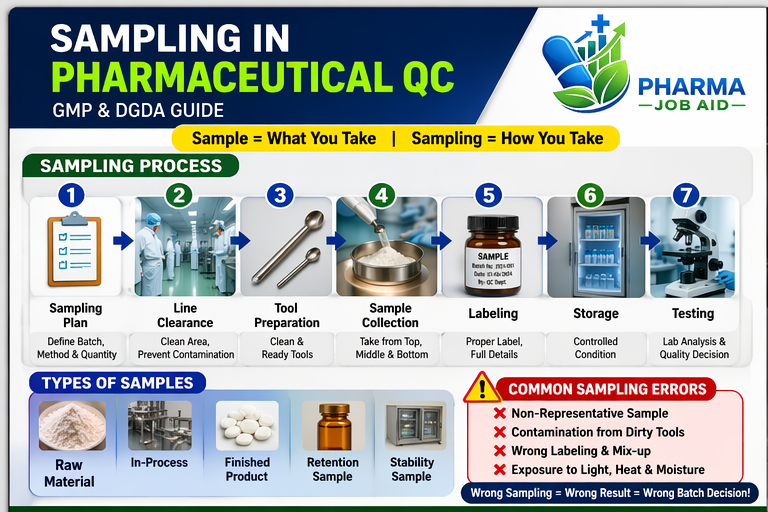
⚙️ What is “Sampling” in QC?
Sampling is the systematic and controlled process by which a sample is collected from a batch or lot. It is not merely the act of taking a portion; rather, it is a scientifically designed and GMP-regulated procedure that ensures the collected sample accurately represents the entire batch. In pharmaceutical industries, sampling is performed according to approved Standard Operating Procedures (SOPs), and it must be documented, traceable, and reproducible.
Sampling involves several critical considerations, including the method of collection, the tools used, the locations from which samples are taken, and the environmental conditions during sampling. For instance, when sampling powder materials, it is not sufficient to collect material only from the top layer, as segregation may occur during storage. Instead, samples are taken from different depths and locations to ensure representativeness. Therefore, sampling is a technical and risk-based activity that directly impacts the reliability of quality control results.
🎯 Importance of Sampling in Pharmaceutical QC
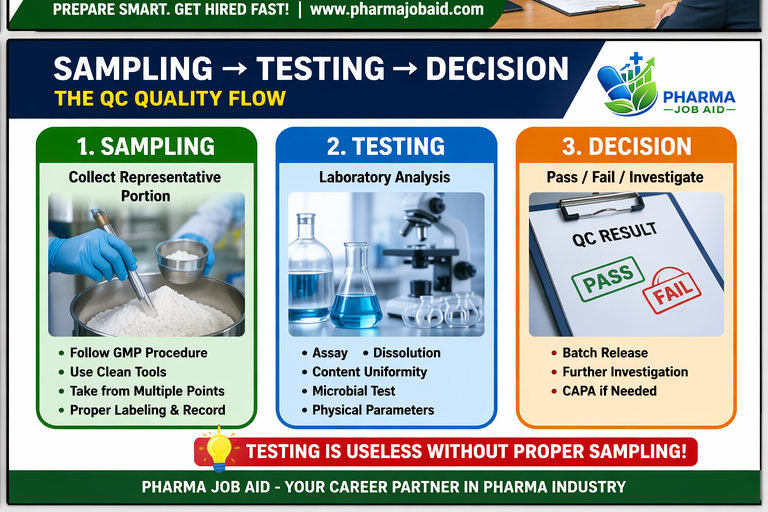
Sampling plays a decisive role in pharmaceutical quality assurance because the accuracy of all laboratory testing depends on the quality of the sample collected. Even the most advanced analytical techniques cannot compensate for a poorly collected sample. In fact, regulatory authorities often emphasize that sampling errors can have a greater impact on final results than analytical errors.
In practice, sampling allows manufacturers to assess product quality without testing every unit, which would be impractical and economically unfeasible. It also helps in detecting contamination, variability, or process deviations at an early stage. For example, during in-process control, sampling enables operators to monitor blend uniformity, tablet weight variation, or dissolution performance, ensuring that the process remains under control throughout production.
🧪 Sampling Process in GMP Environment
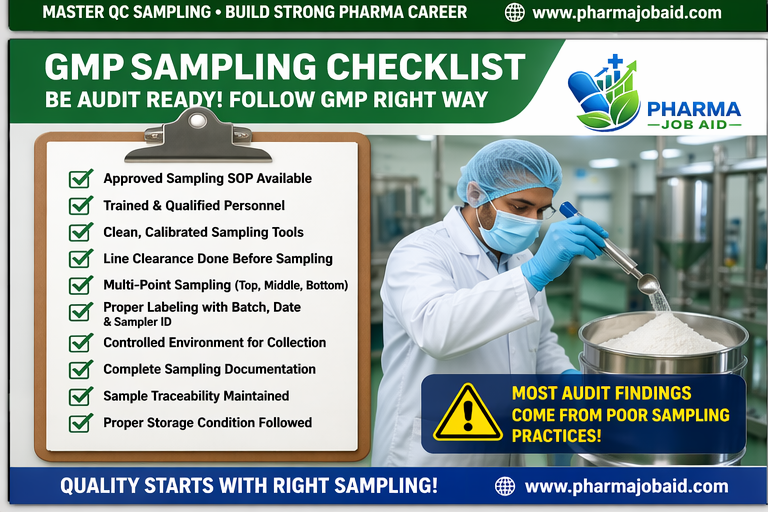
In a GMP-compliant pharmaceutical facility, sampling follows a structured and documented process. Initially, a sampling plan is defined based on batch size, material characteristics, and risk assessment. Before sampling begins, the area must undergo proper line clearance to eliminate the risk of contamination or mix-ups. Sampling tools such as scoops, thieves, or pipettes must be cleaned, dried, and, where required, sterilized.
The actual collection of samples is performed by trained personnel, often from the quality control or quality assurance department. Samples are typically taken from multiple locations within the container or batch to ensure representativeness. After collection, each sample is labeled with critical information such as material name, batch number, sampling date, and sampler identity. The samples are then stored under controlled conditions to prevent degradation or contamination before analysis.
Documentation is an essential part of the sampling process. Every step, from planning to execution, must be recorded in sampling logs or records to ensure traceability and regulatory compliance. This documentation is frequently reviewed during audits by authorities such as the Directorate General of Drug Administration (DGDA).
📊 Types of Samples in Pharmaceutical QC
In pharmaceutical operations, different types of samples are collected depending on the purpose of testing. Raw material samples are taken from incoming materials to verify their identity, purity, and quality before use in production. In-process samples are collected during manufacturing to monitor critical parameters and ensure that the process remains within specified limits. Finished product samples are taken after packaging to confirm compliance with specifications before batch release.
Additionally, retention samples are stored for future reference, particularly for investigating complaints or conducting stability studies. Stability samples are kept under defined environmental conditions to evaluate the shelf life of the product over time. Each type of sample serves a distinct purpose within the overall quality management system, and their proper handling is essential for maintaining product integrity.
🔄 Sampling Techniques Used in QC
Different sampling techniques are employed depending on the nature of the material and the level of risk involved. Random sampling is widely used in pharmaceutical QC because it minimizes bias and ensures that every unit has an equal chance of being selected. Stratified sampling is applied when materials may not be uniformly distributed, such as powders or granules, where samples are taken from different layers or sections.
Systematic sampling involves selecting samples at predetermined intervals, such as every tenth container or unit. Composite sampling, on the other hand, combines multiple individual samples into a single sample for analysis, which is particularly useful for homogeneous materials. The choice of sampling technique is critical and must be justified based on scientific reasoning and regulatory expectations.
⚠️ Risks and Challenges in Sampling
Sampling is associated with several risks that can compromise the reliability of QC results if not properly managed. One of the most common issues is non-representative sampling, where the collected sample does not accurately reflect the batch due to improper technique or location. Contamination is another major concern, especially if sampling tools or environments are not adequately controlled.
Labeling errors can lead to sample mix-ups, which may result in serious regulatory non-compliance. Environmental factors such as humidity, temperature, and light exposure can also affect sample integrity, particularly for sensitive materials. Therefore, strict adherence to SOPs and GMP guidelines is essential to mitigate these risks.
🏭 Practical Example from Pharmaceutical Industry
Consider a batch of 50,000 capsules produced in a manufacturing facility. It is not feasible to test every capsule; instead, a defined number of capsules are sampled from different points in the batch. If the sampling is done correctly, the test results obtained from these capsules will accurately represent the quality of the entire batch. However, if the sampling is biased—for example, if capsules are taken only from one section of the batch—the results may not reflect the actual variability within the batch, potentially leading to incorrect quality decisions.

📌 Key Difference Between Sample and Sampling
The distinction between sample and sampling is straightforward yet critical. A sample is the actual portion of material that is tested in the laboratory, whereas sampling is the process by which that portion is selected. In other words, the sample is the outcome, and sampling is the method used to achieve that outcome. Both are interdependent, and the reliability of one depends entirely on the correctness of the other.
📐 Statistical Basis of Sampling in Pharmaceutical QC
In pharmaceutical quality control, sampling is not only a procedural requirement but also a statistically driven activity. The objective is to ensure that the selected sample provides a high level of confidence in representing the entire batch. Statistical tools are often used to determine sample size, acceptance criteria, and risk levels. Concepts such as population, confidence level, and margin of error play a crucial role in designing sampling plans. For example, in large batches, it is neither practical nor necessary to test every unit; instead, statistical sampling allows quality professionals to make reliable decisions with a defined level of assurance.
One commonly applied concept is the square root rule (√N + 1), where the number of containers to be sampled is derived from the total number of containers in the batch. This approach balances practicality with statistical confidence. Additionally, acceptance sampling plans, such as those based on AQL (Acceptable Quality Limit), are sometimes used to determine whether a batch meets predefined quality standards. These statistical approaches ensure that sampling is scientifically justified rather than arbitrary, thereby strengthening the reliability of quality decisions.
⚖️ Regulatory Expectations for Sampling (WHO, EU GMP, DGDA)
Regulatory authorities place strong emphasis on sampling because it directly impacts product quality and patient safety. According to guidelines from the World Health Organization, sampling procedures must be clearly defined, documented, and designed to prevent contamination and mix-ups. The guidelines also emphasize that samples should be truly representative and collected by trained personnel using appropriate tools and techniques.
Similarly, EU GMP guidelines, particularly Annex 8, outline detailed requirements for sampling starting materials and packaging materials. These guidelines stress the importance of sampling from multiple containers and locations, especially when dealing with heterogeneous materials. In Bangladesh, the Directorate General of Drug Administration (DGDA) expects pharmaceutical manufacturers to maintain robust sampling SOPs, proper documentation, and complete traceability of all samples. During inspections, regulators often review sampling records, observe sampling practices, and verify compliance with approved procedures.
Failure to comply with regulatory expectations can result in serious consequences, including batch rejection, warning letters, or suspension of manufacturing licenses. Therefore, adherence to regulatory requirements is not optional but a fundamental aspect of pharmaceutical quality management.
🧾 Documentation and Traceability in Sampling
Documentation is a cornerstone of GMP, and sampling is no exception. Every sampling activity must be recorded in a clear, accurate, and traceable manner. This includes details such as the sampling plan, date and time of sampling, batch number, quantity sampled, sampling locations, and the identity of the personnel involved. Proper documentation ensures that sampling activities can be reviewed, verified, and audited at any time.
Traceability is equally important, as it allows each sample to be linked back to its original batch and sampling conditions. This is particularly critical during investigations, such as out-of-specification (OOS) results or product complaints. Without proper traceability, it becomes difficult to determine whether the issue lies in the manufacturing process, the sampling procedure, or the analytical method.
In modern pharmaceutical facilities, electronic systems are increasingly used to manage sampling records and ensure data integrity. These systems help prevent errors, improve efficiency, and ensure compliance with regulatory requirements such as data integrity principles (ALCOA+).
🧫 Sampling in Microbiological Quality Control
Sampling in microbiological quality control presents unique challenges compared to chemical analysis. Microbial contamination is often unevenly distributed, making it more difficult to obtain a representative sample. In addition, microorganisms can grow or die depending on environmental conditions, which can affect the accuracy of results.
Environmental monitoring is a key aspect of microbiological sampling and includes air sampling, surface swabbing, and personnel monitoring. These samples help assess the cleanliness of manufacturing areas and ensure compliance with cleanroom standards. Water sampling is also critical, particularly for purified water and water for injection (WFI), as these are widely used in pharmaceutical manufacturing.
The sampling process in microbiology must be conducted under controlled conditions to prevent contamination. Sterile tools and aseptic techniques are essential, and samples must be transported and analyzed promptly to preserve their integrity. Any deviation in sampling conditions can significantly impact the results and lead to incorrect conclusions about microbial quality.
🔍 Relationship Between Sampling and OOS/OOT Investigations
Sampling plays a crucial role in the investigation of Out of Specification (OOS) and Out of Trend (OOT) results. When an unexpected result is obtained during testing, one of the first steps in the investigation is to assess whether the sample was collected correctly. If the sampling process is found to be flawed, the validity of the test result may be questioned.
For example, if a non-representative sample is collected from a segregated powder blend, it may show a higher or lower concentration of the active ingredient than the actual batch average. This could lead to an OOS result, even though the batch itself may be compliant. In such cases, resampling and retesting may be required, following a scientifically justified approach.
Regulatory authorities expect companies to thoroughly evaluate sampling practices during OOS investigations. This includes reviewing sampling procedures, training records, and environmental conditions. A well-documented and robust sampling system can significantly simplify investigations and support scientifically sound conclusions.
🏗️ Role of Sampling in Process Validation and Qualification
Sampling is an integral part of process validation and equipment qualification in pharmaceutical manufacturing. During process validation, samples are collected at various stages of production to demonstrate that the process consistently produces products meeting predetermined specifications. These samples provide critical data for evaluating process performance and identifying potential sources of variability.
Similarly, during equipment qualification, sampling may be used to verify cleaning effectiveness, cross-contamination control, and operational consistency. For example, swab samples may be collected from equipment surfaces to ensure that cleaning procedures are effective and that no residues remain. These samples are analyzed to confirm compliance with established acceptance criteria.
The data generated from sampling activities during validation and qualification are used to support regulatory submissions and demonstrate compliance with GMP requirements. Therefore, the accuracy and reliability of sampling are essential for the success of these activities.
🌍 Real-World GMP Audit Observations on Sampling
In real-world GMP audits, sampling practices are frequently scrutinized by inspectors. Common observations include inadequate sampling techniques, lack of proper documentation, and failure to follow approved SOPs. For instance, inspectors may observe whether samples are collected from appropriate locations within a batch or whether sampling tools are properly cleaned and labeled.
Another common observation is the lack of scientific justification for sampling plans. In some cases, companies may use fixed sampling quantities without considering batch size or material characteristics. This can lead to non-representative sampling and unreliable results. Inspectors may also review training records to ensure that personnel involved in sampling are adequately qualified.
Addressing these observations requires a proactive approach, including regular training, periodic review of sampling procedures, and continuous improvement of sampling practices. By maintaining high standards in sampling, companies can enhance their compliance and reduce the risk of regulatory issues.
🚀 Future Trends in Sampling and Quality Control
The field of pharmaceutical quality control is continuously evolving, and sampling practices are also undergoing significant advancements. One emerging trend is the use of Process Analytical Technology (PAT), which enables real-time monitoring of critical quality attributes during manufacturing. PAT reduces reliance on traditional sampling by providing continuous data, thereby improving process understanding and control.
Another trend is the adoption of automated sampling systems, which minimize human intervention and reduce the risk of errors. These systems can collect samples at predefined intervals and locations, ensuring consistency and reproducibility. Digitalization and data analytics are also playing an increasing role in sampling, enabling more sophisticated analysis of sampling data and improving decision-making.
Despite these advancements, the fundamental principles of sampling remain unchanged. The need for representative, accurate, and reliable samples will always be central to pharmaceutical quality control. As technology evolves, it will complement rather than replace the core principles of sampling.
🔗 Integration of Sampling with the Pharmaceutical Quality Management System (QMS)
Sampling in pharmaceutical quality control does not operate in isolation; rather, it is deeply integrated within the overall Quality Management System (QMS). It directly supports key quality pillars such as deviation management, CAPA (Corrective and Preventive Action), change control, validation, and risk management. Every sampling activity generates data, and this data becomes part of the broader decision-making framework within the organization.
For example, if repeated sampling results show variability in assay values, this may trigger a deviation or initiate a trend analysis under QMS. Similarly, sampling outcomes during in-process control may lead to immediate corrective actions on the manufacturing floor. Therefore, sampling is not just a laboratory activity but a cross-functional process that connects production, quality assurance, and quality control. A robust QMS ensures that sampling procedures are periodically reviewed, updated based on risk, and aligned with current regulatory expectations.
🧠 Risk-Based Approach to Sampling (ICH Q9 Perspective)
Modern pharmaceutical quality systems emphasize a risk-based approach, as outlined in International Council for Harmonisation Q9 (Quality Risk Management). In this context, sampling plans are not fixed but are designed based on the level of risk associated with the material, process, or product. High-risk materials, such as active pharmaceutical ingredients (APIs) or sterile products, require more rigorous and extensive sampling compared to low-risk materials like secondary packaging components.
Risk factors considered during sampling include material variability, supplier reliability, process complexity, and historical data. For instance, if a supplier has a strong track record of consistent quality, reduced sampling may be justified. Conversely, new suppliers or materials with known variability may require intensified sampling. This risk-based approach ensures optimal use of resources while maintaining high standards of quality and compliance.
🧩 Sampling of Different Dosage Forms and Their Challenges
Sampling strategies vary significantly depending on the dosage form being handled. Solid dosage forms such as tablets and capsules are generally easier to sample, as individual units can be selected randomly or systematically. However, even in these cases, challenges such as weight variation and content uniformity must be considered.
In contrast, sampling of powders and granules presents unique challenges due to the risk of segregation. Differences in particle size, density, and flow properties can lead to uneven distribution of active ingredients. Therefore, samples must be collected from multiple locations within the container to ensure representativeness.
Liquid dosage forms require thorough mixing before sampling to ensure uniform distribution of components. Suspensions and emulsions are particularly challenging, as phase separation may occur over time. In such cases, improper sampling can lead to significant analytical errors.
Sterile products present the highest level of complexity, as sampling must be performed under aseptic conditions to prevent contamination. Any breach in sterility during sampling can compromise the entire batch. Therefore, specialized facilities, equipment, and trained personnel are required for sampling sterile products.
🧴 Sampling of Packaging Materials and Components
Sampling is not limited to drug substances and products; it also extends to packaging materials such as bottles, blisters, caps, and labels. These components play a critical role in maintaining product stability and integrity, and any defect in packaging can have serious consequences.
Sampling of packaging materials typically involves visual inspection, dimensional checks, and functional testing. For example, samples of blister packs may be tested for seal integrity, while bottle caps may be evaluated for torque and sealing performance. Sampling plans for packaging materials are often based on statistical methods and supplier quality history.
Proper sampling of packaging materials is essential to ensure that they meet specifications and are compatible with the product. It also helps in detecting defects early, thereby preventing potential quality issues during production or storage.
🧾 Role of SOPs and Training in Sampling Excellence
Standard Operating Procedures (SOPs) are the backbone of sampling activities in pharmaceutical manufacturing. A well-designed sampling SOP provides clear instructions on how, when, and where samples should be collected, as well as the tools and techniques to be used. It also defines responsibilities, documentation requirements, and acceptance criteria.
However, the effectiveness of SOPs depends largely on the competence of the personnel performing the sampling. Training plays a crucial role in ensuring that sampling is carried out correctly and consistently. Personnel must be trained not only on the SOPs but also on the scientific principles underlying sampling. This includes understanding material behavior, potential sources of error, and the importance of representativeness.
Regular training and competency assessments are essential to maintain high standards of sampling practices. Any gaps in training can lead to errors, which may compromise the quality of the sample and, consequently, the reliability of test results.
🔍 Data Integrity and ALCOA+ Principles in Sampling
In the modern pharmaceutical industry, data integrity is a critical concern, and sampling data must comply with ALCOA+ principles—Attributable, Legible, Contemporaneous, Original, Accurate, Complete, Consistent, Enduring, and Available. Every sampling record must clearly indicate who performed the sampling, when it was done, and how it was conducted.
For example, the identity of the sampler must be recorded to ensure accountability, and the sampling activity must be documented at the time it is performed to maintain contemporaneity. Any corrections or changes to sampling records must be properly justified and documented to ensure transparency.
Electronic systems are increasingly used to manage sampling data, providing enhanced control and traceability. These systems help prevent unauthorized changes, ensure data security, and facilitate compliance with regulatory requirements. Maintaining data integrity in sampling is essential for building trust with regulatory authorities and ensuring the credibility of quality decisions.
🧪 Cleaning Verification and Cross-Contamination Control via Sampling
Sampling plays a vital role in cleaning validation and cross-contamination control. After cleaning equipment, samples are collected from surfaces to verify that no residues of previous products remain. These samples may be collected using swabs or rinse methods and are analyzed to ensure that residue levels are within acceptable limits.
Effective cleaning verification ensures that there is no risk of cross-contamination between different products, which is particularly important in multi-product facilities. Sampling in this context must be carefully planned to cover worst-case locations, such as hard-to-clean areas or areas with high product contact.
The results of cleaning verification sampling are used to validate cleaning procedures and demonstrate compliance with regulatory requirements. Any failure in cleaning verification may require re-cleaning, investigation, and revision of cleaning procedures.
📈 Trend Analysis and Continuous Improvement Using Sampling Data
Sampling data is not only used for immediate quality decisions but also for long-term trend analysis and continuous improvement. By analyzing sampling results over time, quality professionals can identify patterns, detect emerging issues, and implement preventive measures.
For example, a gradual decline in assay values across multiple batches may indicate a process drift that requires investigation. Similarly, recurring variability in certain parameters may point to issues with raw materials, equipment, or environmental conditions. Trend analysis helps organizations move from reactive to proactive quality management.
In advanced quality systems, statistical tools and software are used to analyze sampling data and generate insights. These insights support decision-making, improve process understanding, and enhance overall product quality. Continuous improvement driven by sampling data is a key element of modern pharmaceutical quality systems.
🌐 Digital Transformation and Automation in Sampling
The pharmaceutical industry is increasingly adopting digital technologies and automation to enhance sampling practices. Automated sampling systems can collect samples at predefined intervals and locations, reducing human intervention and minimizing the risk of errors. These systems are particularly useful in continuous manufacturing processes, where real-time monitoring is essential.
Digital tools also enable better management of sampling data, providing real-time visibility and facilitating data analysis. Integration with Laboratory Information Management Systems (LIMS) allows seamless tracking of samples from collection to analysis and reporting.
Despite these advancements, human expertise remains essential in designing sampling plans, interpreting results, and making quality decisions. Technology serves as an enabler, enhancing efficiency and accuracy while supporting compliance with regulatory requirements.
🧬 Material Characteristics and Their Impact on Sampling Strategy
One of the most critical yet often underestimated aspects of sampling is the inherent nature of the material being sampled. Different materials behave differently under storage and handling conditions, and these behaviors directly influence how samples should be collected. For example, powders and granules are highly susceptible to segregation due to differences in particle size, density, and electrostatic charge. This means that even within a single container, the composition may not be uniform, making it essential to collect samples from multiple depths and locations.
Liquids, on the other hand, may appear homogeneous but can exhibit stratification or settling over time, especially in suspensions and emulsions. In such cases, proper mixing before sampling is essential to ensure uniform distribution of active ingredients. Hygroscopic materials present another challenge, as they can absorb moisture from the environment, potentially altering their properties during sampling. Similarly, light-sensitive materials require protection from exposure during sampling to prevent degradation.
Understanding these material characteristics allows quality professionals to design sampling procedures that minimize variability and ensure representativeness. It also highlights the importance of scientific judgment in sampling, as a one-size-fits-all approach is rarely appropriate in pharmaceutical manufacturing.
🏭 Supplier Qualification and Its Influence on Sampling Frequency
Sampling strategies are closely linked to supplier qualification and performance history. In a well-established pharmaceutical quality system, suppliers are categorized based on their reliability, quality consistency, and compliance with regulatory standards. Approved suppliers with a strong track record of delivering consistent quality materials may be subject to reduced sampling frequency under a risk-based approach.
Conversely, new suppliers or those with a history of quality issues may require more intensive sampling and testing. This ensures that any variability or non-compliance is detected early before it impacts production. Over time, as confidence in a supplier’s quality system increases, sampling requirements may be adjusted accordingly.
This dynamic approach to sampling not only optimizes resource utilization but also aligns with modern regulatory expectations for risk-based decision-making. It demonstrates how sampling is not a static process but an evolving one, influenced by data, experience, and continuous evaluation of supplier performance.
🧪 Sampling in Continuous Manufacturing Environments
With the advancement of pharmaceutical technology, continuous manufacturing is becoming increasingly common. Unlike traditional batch manufacturing, where samples are collected at discrete stages, continuous manufacturing requires a different approach to sampling. In this context, sampling is often integrated with real-time monitoring systems, enabling continuous assessment of product quality.
Process Analytical Technology (PAT) tools play a key role in this environment, allowing for real-time measurement of critical quality attributes without the need for frequent manual sampling. However, traditional sampling still has a role, particularly for verification and regulatory purposes. The challenge lies in integrating these two approaches to ensure that quality is consistently maintained.
Continuous manufacturing requires a shift in mindset from static sampling plans to dynamic, real-time quality assurance strategies. This evolution reflects the broader trend toward digitalization and automation in the pharmaceutical industry, where data-driven decision-making is becoming the norm.
🧩 Human Factors and Behavioral Aspects in Sampling
While sampling is often viewed as a technical process, human factors play a significant role in its execution. The accuracy and reliability of sampling depend heavily on the skills, knowledge, and attention to detail of the personnel performing the task. Even with well-defined SOPs, human error can occur due to factors such as fatigue, lack of training, or complacency.
Behavioral aspects, such as adherence to procedures and awareness of contamination risks, are equally important. For example, a sampler who shortcuts the process by collecting samples from a single location instead of multiple points may unintentionally compromise the representativeness of the sample. Similarly, improper handling of sampling tools can introduce contamination.
To address these challenges, organizations must invest in comprehensive training programs, regular competency assessments, and a strong quality culture. Encouraging accountability and attention to detail can significantly improve sampling practices and reduce the risk of errors.
🔄 Change Control and Its Impact on Sampling Procedures
Sampling procedures are not static and may need to be updated in response to changes in materials, processes, equipment, or regulatory requirements. Such changes must be managed through a formal change control system to ensure that their impact on sampling is properly evaluated and documented.
For example, a change in raw material supplier may necessitate a revision of the sampling plan to account for differences in material characteristics. Similarly, the introduction of new equipment or processes may require modifications to sampling techniques or locations. Even changes in regulatory guidelines may prompt updates to sampling procedures.
Effective change control ensures that sampling practices remain aligned with current conditions and regulatory expectations. It also provides a structured framework for evaluating the impact of changes and implementing them in a controlled and compliant manner.
🧾 Role of Sampling in Product Complaints and Recall Management
Sampling plays a crucial role in the investigation of product complaints and the management of recalls. When a complaint is received, retention samples are often analyzed to determine whether the reported issue is related to the product quality. These samples serve as a reference point, allowing quality professionals to compare the characteristics of the product at the time of release with those observed in the market.
In the event of a recall, sampling may be used to assess the extent of the issue and identify affected batches. This information is critical for determining the scope of the recall and implementing appropriate corrective actions. Accurate and well-documented sampling records are essential for supporting these activities and ensuring regulatory compliance.
The ability to trace samples back to their original batches and sampling conditions is particularly important in these situations. It enables organizations to conduct thorough investigations, identify root causes, and implement effective CAPA measures.
🌱 Environmental and Sustainability Considerations in Sampling
As the pharmaceutical industry moves toward more sustainable practices, environmental considerations are increasingly influencing sampling activities. This includes minimizing waste generated during sampling, optimizing sample quantities, and using environmentally friendly materials and tools.
For example, excessive sampling can lead to unnecessary waste of valuable materials, particularly in the case of high-cost APIs. By adopting risk-based and statistically justified sampling plans, organizations can reduce waste while maintaining quality standards. Additionally, the use of reusable or recyclable sampling tools can help minimize environmental impact.
Sustainability also extends to energy consumption and resource utilization during sample storage and analysis. By integrating environmental considerations into sampling practices, pharmaceutical companies can contribute to broader sustainability goals while maintaining compliance with regulatory requirements.
🔍 Advanced Analytical Techniques and Their Relationship with Sampling
The advancement of analytical technologies has significantly enhanced the capabilities of pharmaceutical quality control laboratories. Techniques such as high-performance liquid chromatography (HPLC), spectroscopy, and mass spectrometry provide highly accurate and sensitive measurements of product quality attributes. However, the effectiveness of these techniques still depends on the quality of the sample being analyzed.
In recent years, non-destructive analytical methods and near-infrared (NIR) spectroscopy have gained popularity for real-time analysis. These techniques can reduce the need for traditional sampling by enabling direct analysis of materials in their original containers. Nevertheless, sampling remains essential for method validation, verification, and regulatory compliance.
The relationship between sampling and analytical techniques highlights the importance of an integrated approach to quality control, where both elements work together to ensure accurate and reliable results.
🧠 Final PharmaJobAid Insight
In pharmaceutical quality control, sampling is not just a routine activity but a scientifically controlled process that directly influences product quality decisions. Regulatory authorities place significant emphasis on sampling practices because they form the foundation of quality evaluation. A well-designed sampling procedure ensures that analytical results are meaningful, reliable, and compliant with GMP standards, ultimately safeguarding patient safety.