
Mastering Interviews in the Pharmaceutical Sector
Interview Attire
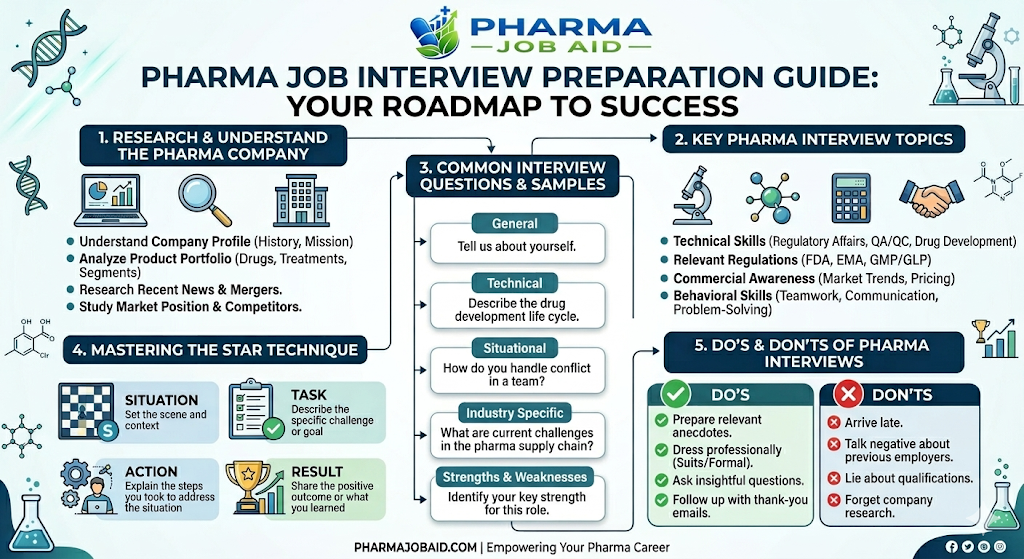
However, when going for interviews, dressing right becomes vital if you want to have an opportunity to succeed in the pharma industry. In case you are looking for a job in the warehouse and the laboratory, it would never do to dress in your jeans and sweatshirts because it is only when the company itself declares that this day is casual that you can consider such outfits. Natural makeup and nice dresses should come to the mind of women who are going to have an interview.
At Pharma Job AID, we understand the significance of proper presentation in the world of pharmacy. We give essential advice about how to prepare for interviews and what is appropriate in terms of dressing so that you can leave the best impression about yourself at a company. With Pharma Job AID, not only could students and job-seekers get information about various job openings, but they could also receive useful resources on professional development.
Visit us now and become a member of Pharma Job AID to get started with pharma jobs in your region through our pharma job portal.
- Interview Attire
- Most Common Questionarries for Interview
- Tell me about yourself
- Why should we hire you?
- Why do you want to change your job?
- What is your strength and weakness?
- Why you want to work for the company?
- What is your relevant coursework?
- What is the biggest challenges facing the pharmaceutical industry today?
Are you planning to find yourself a job within the pharmaceutical sector? Then, make sure you are ready for the commonly asked questions in interviews. With a recent bachelor’s degree in pharmaceutical sciences, make sure you can confidently demonstrate all the skills acquired concerning drug development, delivery, and pharmacology. This is what will help you impress your interviewer.
Most Common Questions for the Interview
Tell me about yourself
While introducing yourself to an interviewer, you need to include your degree in Pharmaceutical Sciences, the detailed knowledge you have of drug development, drug delivery, and pharmacology, as well as your interest in the research and development field in the pharmaceutical industry. You can use terms such as “drug development” and “pharmacology” here to highlight your relevant skills.
For instance, I hold a degree in Pharmaceutical Sciences, and I have worked in the pharmaceutical industry for the past 7 years, mainly in quality assurance. During this period, I gained experience in quality system development and implementation, regulatory compliance, internal auditing, deviation investigation and corrective actions. It is crucial to keep up-to-date with regulations and guidelines in the pharmaceutical industry as a quality assurance professional. As quality assurance at my previous company, I developed and implemented a quality system for our new line of drugs. My work included developing quality control, quality assurance and regulatory procedures. The risk-based approach to quality management that I used helped us save money.
Why should we hire you?
Speaking about your qualifications for this position, highlight your theoretical knowledge in the field of drug development and pharmacology and any experience that you have working on research. You must express your devotion to staying aware of the latest developments in your field by using keywords such as “research” and “drug development.”
For example, speaking about the things that make you competitive against other candidates, be sure to mention not only your analytical skills and problem-solving capabilities but also the fact that you have an educational background and are really interested in research. Be sure to use such keywords as “competitive,” “analytical skills,” and “problem-solving.”
For example: “Due to my academic and professional background in the field of pharmaceuticals and my love for doing research, I can prove my great expertise in managing drug manufacturing facilities. In particular, I was successful in developing and managing all the necessary systems as well as conducting audits to solve any problems connected with compliance with GMP requirements.””
Why do you want to change your job?
If questioned about the reason why you need to switch jobs, explain that you are interested in gaining more practical experience and contributing to the creation of new drugs. It is recommended that you use phrases such as “practical experience” and “drug development” to demonstrate your interest in the field.
For example:
“I have enjoyed working in my current role, but I am looking for new challenges and opportunities for growth. I am particularly interested in this position because it offers the opportunity to work with a highly regarded company in the pharmaceutical industry and to contribute to the development and delivery of high-quality products. I am excited about the prospect of working on new projects and expanding my skills and experience. I believe that this position would allow me to make a significant impact in ensuring patient safety and improving the quality of pharmaceutical products, which is a mission that aligns with my personal and professional values.”
You must be sincere and honest when explaining the rationale behind your desire to switch jobs while focusing on the positive side of this decision. You should not criticise your current employer or job.
What are your strengths and weaknesses?
For your question on your strengths and weaknesses, you should highlight the following: your good teamwork skills and your strong analytical skills as your strengths. Your weakness would be that you can at times be very detail-oriented, which you have to work on. Highlight your strengths using the following keywords: team environment and analytical skills.
Prepare yourself before the interview by researching the company and what it stands for in terms of developing innovative drugs and treatments. Highlight your knowledge of the company by using the following keywords: innovative drugs and ethical practices.
For example:
Strengths: My main strength is my ability to pay attention to details. I feel that paying close attention to details is something that is extremely important when working in the field of pharmaceuticals, since mistakes there often lead to undesirable consequences for patients. Another one of my strengths is my ability to solve problems effectively and cope under pressure. I think that this makes me a great quality manager since I am always ready to face any challenge and address any problem.
Weaknesses: One of my weaknesses is my tendency to take on several projects at once. Although I am a very meticulous person who does not want to miss anything when completing an assignment, I realise that sometimes it is necessary to make choices and focus on the most urgent assignments first to finish everything in time. In order to overcome this weakness, I started using lists and schedules.
The process of describing weaknesses involves showing your vulnerability to potential employers and demonstrating your ability to understand and admit your own mistakes.
Why do you want to work for the company?
When explaining the reasons for applying for the company, stress your interest in the company because of its innovation philosophy and commitment to researching and discovering new medications. Make sure to use keywords related to “innovation” and “pharmaceutical research.”
For example:
“I have long been impressed with the reputation of your company within the pharmaceutical industry and with the high quality of the products that you produce. Your company is well-known for striving to innovate, improving processes and creating products that can significantly benefit the patients. Being interested in quality assurance in the pharmaceutical field, I am very excited about an opportunity to join a team that strives towards the same goal.
Besides, I was positively impressed by the culture at your company, which promotes collaboration and teamwork, as well as by its diversity. I am convinced that these values make the company’s workplace environment pleasant and beneficial for everyone. In addition, I value an opportunity to gain valuable experience and learn from more experienced professionals.”
What is your relevant coursework?
When mentioning your coursework related to the field, you should discuss your experience in taking such courses as Drug Development, Pharmacology, Medicinal Chemistry, and Biostatistics. Use the keywords “drug development” and “pharmacology.”
To highlight your experience in pharmaceutical research and development, you may want to discuss the projects that you have completed during your studies, specifically those that are dedicated to drug development and delivery, as well as your internship in a pharmaceutical company, where you participated in clinical trials and data analysis. Use the keywords “research projects” and “clinical trials.”
In regard to your efforts to stay abreast of the latest innovations within the pharmaceutical industry, it would be good to mention your engagement with industry publications and attending conferences/seminars, following industry leaders/organisations via social media, etc. Use the keywords “industry publications” and “industry leaders.”
What are the biggest challenges facing the pharmaceutical industry today?
In response to the question on what some of the greatest challenges in the pharmaceutical industry would be, it should include such concepts as increased regulatory scrutiny, escalating prices of drugs, and heightened competition. It is also important to include keywords such as “regulatory scrutiny” and “rising drug.
For example:
The first problem which one may want to discuss is the ever-growing need for regulatory compliance. The issue of compliance is becoming especially pressing because pharmaceutical regulations are constantly changing; therefore, it becomes more difficult to adhere to the latest standards and to ensure regulatory compliance. Another difficulty connected with this challenge is the fact that companies are often operating not just in a single country but in multiple markets, each of which has its unique regulations. In order to ensure compliance, it is necessary to combine knowledge, resources, and collaboration among various departments. As an expert in quality assurance, it is essential to remain well-informed about any changes concerning regulations and standards in the area and collaborate with other professionals on this matter.
Mastering Interviews in the Pharmaceutical Sector