🌍 Introduction: A Landmark Shift in Global Pharma Trade
The global pharmaceutical landscape is undergoing a major transformation in 2026 following a historic trade agreement between the United Kingdom and the United States.
This deal is not just about tariffs—it represents a structural shift in drug pricing, reimbursement, and global supply chain strategy.
For professionals in Bangladesh’s pharmaceutical sector, this development is highly relevant as it signals new global pricing pressures, export opportunities, and regulatory shifts.
📊 Key Highlights of the UK–US Pharma Trade Deal
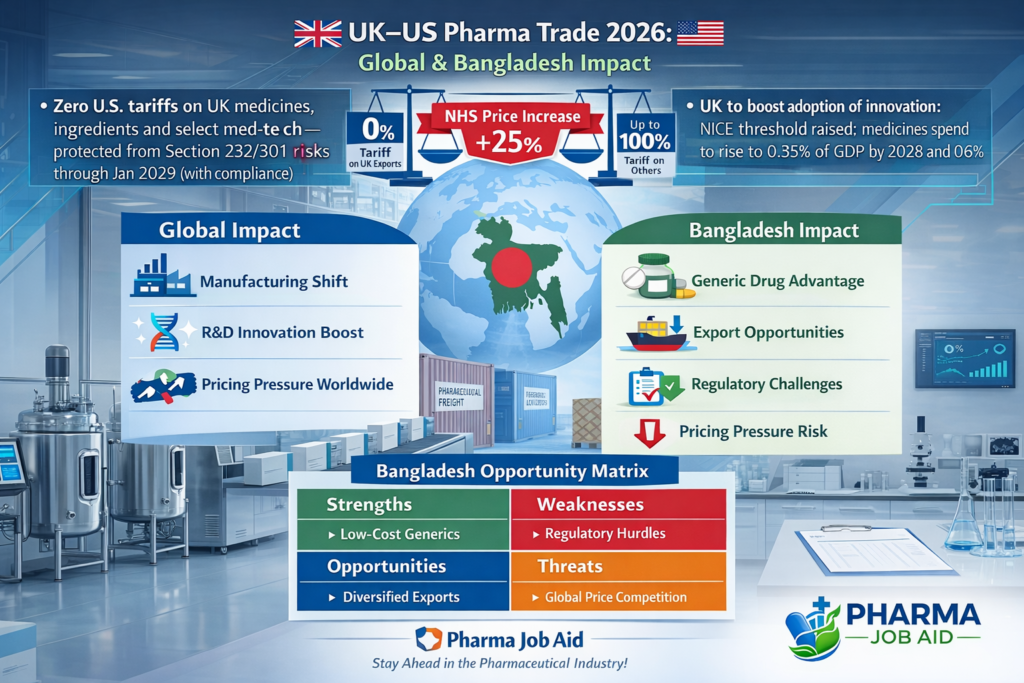
1. Zero Tariffs on Pharmaceutical Exports
- The US has granted 0% tariffs on UK pharmaceutical exports
- Valid for at least 3 years (until ~2028)
- Protection from additional tariffs under Sections 232 & 301
👉 This is a major deviation from the broader US tariff policy, which includes up to 100% tariffs on patented drugs in other cases.
2. NHS Drug Pricing Increase (25% Boost)
- The UK’s National Health Service (NHS) will:
- Increase net price paid for new medicines by 25% from April 2026
- Applies mainly to innovative / newly launched drugs
👉 This is a huge policy shift, as the UK historically maintained strict cost control pricing models.
3. Increased Pharmaceutical Spending
- UK medicine spending:
- 0.3% → 0.35% of GDP by 2028
- 0.6% by 2035
👉 This indicates a long-term commitment to:
- Innovation
- Faster access to new therapies
- Improved pharma investment climate
4. Tariff Relief Linked to Pricing Agreements
- Pharma companies must:
- Comply with US pricing expectations
- Align with Most Favored Nation (MFN) pricing model
👉 Companies that fail to comply may face tariffs up to 100% under US policy
💊 Why This Deal Happened: The Real Drivers
1. High Drug Prices in the US
- The US has the highest drug prices globally
- Patients face affordability challenges
👉 The US strategy:
- Push other countries to pay more for medicines
- Reduce burden on US healthcare system
2. Pressure on Pharma Companies
- US policy threatens:
- Tariffs
- Market access restrictions
- In exchange, companies get:
- Tariff relief
- Market protection
3. Global Pricing Rebalancing
This deal reflects a major shift:
| Region | Previous Model | New Direction |
|---|---|---|
| US | High prices | Reduce costs |
| UK/EU | Low prices | Increase prices |
| Global | Fragmented | Harmonized pricing |
🏭 Impact on Global Pharmaceutical Industry
1. Shift in Manufacturing Strategy
- Companies may:
- Move production to US or tariff-free regions
- Increase localized manufacturing
👉 Already seen:
- Increased US investment by global pharma giants
- Supply chain restructuring
2. Innovation Incentives Increase
- Higher UK pricing = better ROI for:
- R&D
- Innovative drugs
👉 Positive impact on:
- Oncology
- Biologics
- Rare disease drugs
3. Pressure on Europe & Other Markets
- EU countries may face:
- Pressure to adopt similar deals
- Risk:
- Losing pharma investment to US/UK
🇧🇩 Impact on Bangladesh Pharmaceutical Industry
This is where it gets critical for PharmaJobAid readers 👇
1. Export Opportunity (Long-Term)
Bangladesh companies like:
- Beximco Pharma
- Square Pharmaceuticals
- Incepta
👉 Could benefit if:
- Global supply chains diversify
- Cost-effective generic manufacturing demand rises
2. Generic Advantage
- US tariffs mainly target patented drugs
- Generics often remain exempt
👉 Bangladesh (generic powerhouse) gains advantage
3. Pricing Pressure Risk
- Global price harmonization may:
- Reduce margins in low-cost markets
- Increase regulatory scrutiny
4. Regulatory Alignment Requirement
To compete globally, Bangladesh must strengthen:
- DGDA compliance
- WHO GMP alignment
- Data integrity & QMS
🔬 Strategic Implications for Pharma Professionals
QA / Regulatory Affairs
- Increased importance of:
- Global pricing compliance
- Documentation alignment
Production & Supply Chain
- Shift toward:
- Export-oriented manufacturing
- Flexible supply chains
Management & MRM
- Need to track:
- Global tariff risks
- Pricing impact on profitability
📈 Future Outlook (2026–2030)
What to Expect:
- More countries negotiating tariff-for-pricing deals
- Expansion of MFN pricing model
- Increased global pharma consolidation
- Rise of regional manufacturing hubs
🧠 Expert Insight (PharmaJobAid Analysis)
This deal signals a new era of “trade-driven drug pricing” where:
✔ Tariffs are used as negotiation tools
✔ Pricing is no longer purely regulatory
✔ Global pharma strategy becomes geopolitically driven
👉 In simple terms:
“Pay more or face tariffs” is becoming the new global pharma rule.
🔗 High Authority Backlinks (SEO Boost)
📌 Conclusion
The UK–US pharma trade deal is not just a bilateral agreement—it is a global pharmaceutical reset.
For Bangladesh:
- 🚀 Opportunity in generics & exports
- ⚠️ Risk in pricing pressure
- 📊 Need for regulatory excellence
👉 Pharma professionals must now think globally, strategically, and compliantly.