Introduction
The global pharmaceutical industry stands at the intersection of innovation, public health, and corporate influence. With life-saving drugs, vaccines, and therapies emerging from decades of research, pharmaceutical companies—often referred to collectively as “Big Pharma”—play a critical role in modern healthcare systems.
However, this influence has also sparked ongoing debates around transparency, ethics, pricing, and regulatory oversight.
Recently, Robert F. Kennedy Jr. proposed the potential release of a controversial dossier known as the “Big Pharma Files.” This proposed release has ignited global conversations across healthcare professionals, policymakers, researchers, and the general public.
The core question is simple yet profound:
👉 Would greater transparency strengthen public trust—or create confusion and risk?
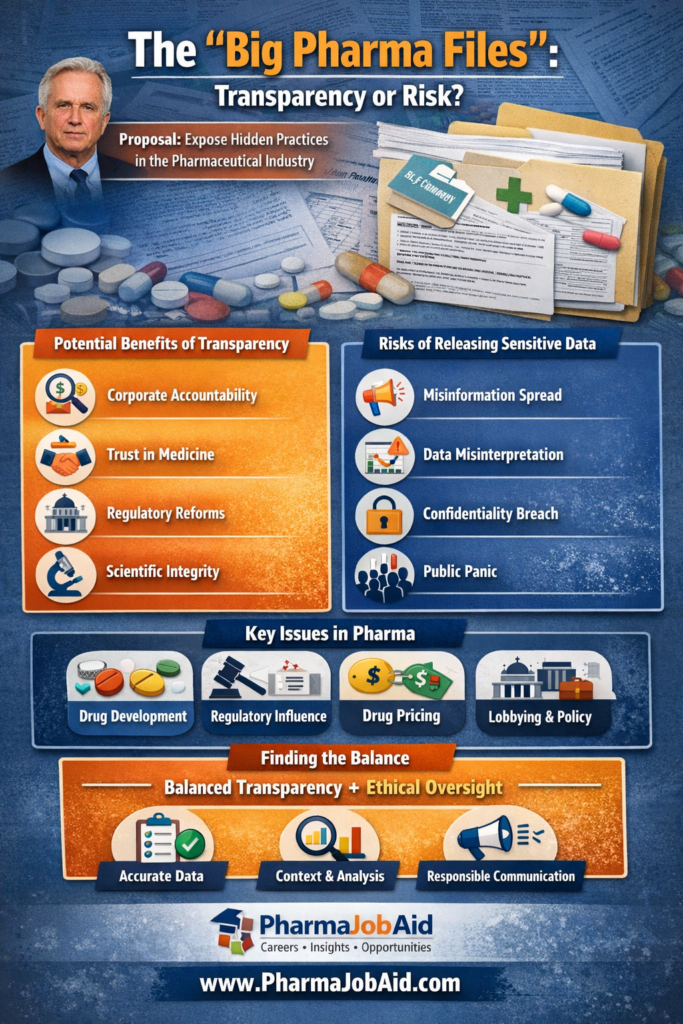
This article explores the implications of the “Big Pharma Files,” analyzing:
- The role of transparency in healthcare
- Regulatory frameworks and corporate accountability
- Risks of misinformation and misinterpretation
- Ethical responsibilities of pharmaceutical companies
- The future of trust in medicine
For more career insights and pharmaceutical industry updates, visit 👉 https://pharmajobaid.com/
Understanding the “Big Pharma Files” Concept
What Are the “Big Pharma Files”?
The “Big Pharma Files” are described as a potential collection of internal pharmaceutical industry documents that may include:
- Drug development strategies
- Clinical trial data interpretations
- Marketing tactics
- Pricing strategies
- Regulatory communications
- Lobbying and policy influence
If released, such files could provide unprecedented insight into how pharmaceutical decisions are made behind the scenes.
Why This Proposal Matters
The pharmaceutical industry operates in a highly regulated environment involving agencies like:
- U.S. Food and Drug Administration
- European Medicines Agency
- World Health Organization
These institutions ensure that drugs are:
✔ Safe
✔ Effective
✔ High quality
However, critics argue that:
- Regulatory capture may occur
- Industry influence can shape decisions
- Financial incentives may conflict with public health
The proposed files aim to shed light on these concerns.
The Case for Transparency in Big Pharma
1. Strengthening Public Trust
Trust is the foundation of healthcare systems.
When patients take medications, they rely on:
- Scientific evidence
- Regulatory approval
- Physician recommendations
Transparency can:
✔ Increase confidence in drug safety
✔ Improve acceptance of vaccines and treatments
✔ Reduce skepticism toward pharmaceutical companies
2. Holding Corporations Accountable
Transparency can act as a powerful accountability mechanism.
Potential benefits include:
- Exposure of unethical practices
- Identification of data manipulation
- Scrutiny of pricing strategies
- Detection of conflicts of interest
Historically, pharmaceutical companies have faced controversies involving:
- Selective reporting of clinical trial results
- Aggressive marketing practices
- Off-label promotion
Greater visibility could prevent such issues.
3. Improving Regulatory Systems
Transparency could enhance regulatory frameworks by:
- Revealing decision-making processes
- Highlighting gaps in oversight
- Encouraging reforms
For example:
- Better disclosure requirements
- Stronger pharmacovigilance systems
- Improved clinical trial transparency
4. Advancing Scientific Integrity
Open access to data can:
✔ Enable independent research
✔ Promote reproducibility
✔ Improve peer review
This aligns with global movements toward open science and data sharing.
The Risks of Releasing Sensitive Pharma Data
While transparency has clear benefits, critics warn of serious risks.
1. Misinterpretation of Complex Data
Pharmaceutical research is highly complex.
Without proper context:
- Clinical trial data may be misunderstood
- Statistical findings may be misrepresented
- Safety signals may be exaggerated
This could lead to:
❌ Public panic
❌ Vaccine hesitancy
❌ Distrust in proven therapies
2. Spread of Misinformation
In the age of social media, information spreads rapidly.
If documents are:
- Taken out of context
- Selectively shared
- Misinterpreted
It could fuel:
- Conspiracy theories
- Anti-science narratives
- Public confusion
3. Confidentiality and Intellectual Property Risks
Pharmaceutical innovation depends on:
- Proprietary research
- Trade secrets
- Competitive advantage
Releasing sensitive documents could:
- Undermine innovation
- Expose confidential data
- Disrupt global markets
4. Legal and Ethical Concerns
The release of internal documents raises questions:
- Who owns the data?
- What are the legal boundaries?
- How should sensitive information be handled?
Balancing transparency with privacy is critical.
Pharmaceutical Industry: A Complex Ecosystem
To understand the debate, we must examine how the pharmaceutical industry operates.
1. Drug Development Lifecycle
Developing a new drug takes:
- 10–15 years
- Billions of dollars
Stages include:
- Discovery
- Preclinical testing
- Clinical trials (Phase I–III)
- Regulatory approval
- Post-marketing surveillance
2. Clinical Trials and Evidence Generation
Clinical trials are the backbone of pharmaceutical research.
They ensure:
✔ Safety
✔ Efficacy
✔ Dosage optimization
However, concerns include:
- Publication bias
- Selective reporting
- Industry-funded research influence
3. Regulatory Oversight
Agencies like the U.S. Food and Drug Administration and European Medicines Agency:
- Review data
- Conduct inspections
- Approve or reject drugs
Despite strict standards, debates remain about:
- Speed vs. safety
- Industry relationships
- Transparency of decisions
4. Pricing and Market Dynamics
Drug pricing is one of the most controversial aspects of Big Pharma.
Factors influencing pricing:
- R&D costs
- Market exclusivity
- Patent protection
- Demand and competition
Critics argue:
❌ Prices are often too high
❌ Profit margins exceed reasonable limits
Corporate Influence and Public Health Policy
1. Lobbying and Policy Shaping
Pharmaceutical companies invest heavily in lobbying.
This can influence:
- Drug approval policies
- Pricing regulations
- Healthcare legislation
2. Public-Private Partnerships
Collaboration between governments and pharma companies is essential for:
- Vaccine development
- Pandemic response
- Public health programs
Example: COVID-19 vaccine development involved global partnerships.
3. Ethical Considerations
Ethical challenges include:
- Access to medicines
- Equity in healthcare
- Clinical trial ethics
Transparency could help address these issues.
Historical Context: Lessons from Past Controversies
The pharmaceutical industry has faced several high-profile controversies:
1. Data Transparency Issues
Cases have emerged where:
- Negative trial results were not published
- Data was selectively reported
2. Marketing Ethics
Concerns include:
- Overpromotion of drugs
- Misleading advertising
- Influence on prescribing behavior
3. Pricing Controversies
Some drugs have seen:
- Sudden price increases
- Limited affordability
- Restricted access
These cases highlight the need for balanced transparency.
Balancing Transparency and Responsibility
1. Context Matters
Releasing data without context can be harmful.
Solutions:
✔ Expert interpretation
✔ Scientific communication
✔ Regulatory guidance
2. Responsible Disclosure Frameworks
Instead of full raw data release, structured approaches could include:
- Summarized reports
- Peer-reviewed analyses
- Regulatory briefings
3. Role of Media and Communication
Media plays a critical role in:
- Interpreting findings
- Preventing misinformation
- Educating the public
Impact on Public Trust in Medicine
1. Trust Crisis in Healthcare
Globally, trust in healthcare systems is evolving.
Factors affecting trust:
- Misinformation
- Pandemic experiences
- Political influence
2. Transparency as a Trust Builder
When done correctly, transparency can:
✔ Increase credibility
✔ Improve patient engagement
✔ Strengthen healthcare systems
3. Risk of Overexposure
Too much unfiltered information can:
❌ Confuse the public
❌ Undermine confidence
❌ Create unnecessary fear
Global Perspective on Pharma Transparency
1. United States
The U.S. Food and Drug Administration promotes:
- Clinical trial transparency
- Adverse event reporting
2. Europe
The European Medicines Agency emphasizes:
- Public access to regulatory documents
- Transparency policies
3. Developing Countries
In countries like Bangladesh:
- Regulatory systems are evolving
- Transparency initiatives are growing
- Public awareness is increasing
Implications for Pharmaceutical Careers
The “Big Pharma Files” debate has significant implications for professionals.
1. Growing Demand for Compliance Roles
Careers in:
- Quality Assurance (QA)
- Regulatory Affairs
- Pharmacovigilance
are becoming more important.
2. Ethical Responsibility in Pharma Jobs
Professionals must:
✔ Uphold data integrity
✔ Ensure patient safety
✔ Follow ethical guidelines
3. Skills Needed in the Modern Pharma Industry
Key skills include:
- Regulatory knowledge
- Data analysis
- Ethical decision-making
- Communication
👉 Explore pharma career opportunities at https://pharmajobaid.com/
Future Outlook: What Comes Next?
1. Increased Demand for Transparency
Global pressure will likely push for:
- Open data policies
- Greater regulatory disclosure
- Public accountability
2. Digital Transformation in Pharma
Technologies like:
- AI
- Big Data
- Blockchain
could improve transparency and traceability.
3. Ethical Pharma Leadership
Future leaders must balance:
✔ Profitability
✔ Innovation
✔ Public health
Conclusion
The proposed “Big Pharma Files” represent more than just a potential document release—they symbolize a broader shift in how society views transparency, accountability, and trust in healthcare.
On one hand, transparency can:
✔ Expose unethical practices
✔ Strengthen accountability
✔ Build public trust
On the other hand, it carries risks:
❌ Misinterpretation
❌ Misinformation
❌ Loss of context
The path forward lies in balanced transparency—where information is:
- Accurate
- Contextualized
- Responsibly communicated
Ultimately, the goal is clear:
👉 A pharmaceutical industry that prioritizes patient safety, scientific integrity, and ethical responsibility.
Call to Action
Stay informed, build your career, and explore opportunities in the pharmaceutical industry:
👉 Visit https://pharmajobaid.com/
SEO Keywords Naturally Integrated
- Big Pharma transparency
- pharmaceutical industry ethics
- drug regulation
- pharma accountability
- public health policy
- clinical trial transparency
- pharma careers
- regulatory affairs
- QA in pharma