
Orthoparamyxoviruses like measles, Nipah, and human parainfluenza virus types 1 and 3 are highly contagious and pretty deadly. They especially hit stem cell transplant patients hard. Until now, doctors haven’t had any approved antiviral treatments to fight them.
Recently, things took a positive turn thanks to Richard Plemper’s team at Georgia State University. They developed an oral antiviral that shows promise against various orthoparamyxoviruses, including HPIV3 and measles. This breakthrough is detailed in a recent Science Advances publication.
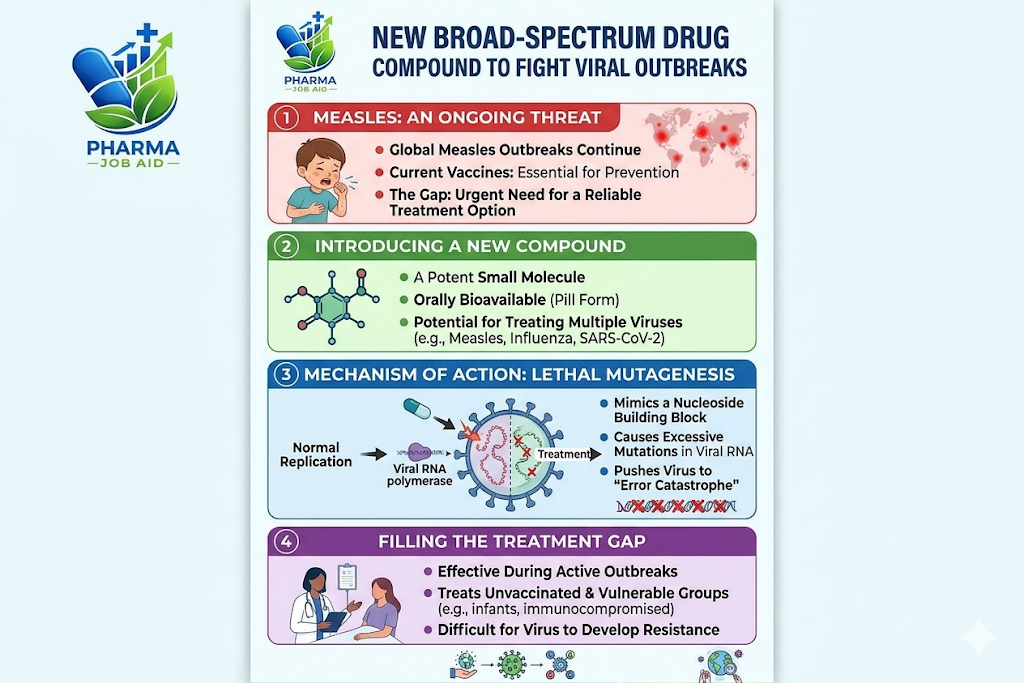
Testing showed this drug works well in both rodent and non-rodent animals. For HPIV in the US, where around three million cases crop up yearly, this could mean an effective new way to keep patients from getting worse. Since pneumonia strikes after a few days, this medication offers critical time to stave off major health issues.
Measles patients might benefit too. Vaccines aren’t reaching everyone, leading to rising transmission rates within and beyond US borders. Plemper emphasised how thrilled the team is about the compound’s effectiveness against such dangerous viruses. He said it targets a spot that stays fairly consistent across different pathogens, something quite rare and valuable.
So yeah, this antiviral looks like it could really help out a lot of people. Before hitting on GHP-88310, researchers had discovered a non-nucleoside inhibitor of the paramyxovirus polymerase. Unfortunately, that drug didn’t sit well with higher mammals like ferrets. Since the goal is to eventually use this stuff to help sick kids and people with weak immune systems, having a drug that’s easy on the body was crucial.
To fix that tolerance issue, the team created GHP-88310, which is basically a tweaked version of their first hit. Here’s the thing – it worked way better than expected. Not only could ferrets and dogs handle super high doses without any problems, it also ended up being more effective than its predecessor. In fact, GHP-88310 showed promise against HPIV3 and measles in both rodent and non-rodent models, plus it’s a good fit for human cells too. It can even be given as a simple daily pill.
Plemper highlights that this improved drug does its job by locking onto the central part of the viral P-L polymerase complex, essentially stopping the virus from replicating. So, not only is it safer and easier to take, but it seems to be a strong fighter against these particular viruses too.
Measles outbreaks are becoming more common and are putting the US at risk of losing its measles elimination status. So, a new antiviral treatment could really make a difference right now. Usually, to handle these outbreaks, public health officials use something called ring vaccination – this means vaccinating people who were around the sick individual. However, because more folks are hesitant about vaccines these days, this approach isn’t working in certain communities.
That’s where a drug like GHP-88310 comes in. As Richard Plemper from Georgia State University puts it, “an oral therapeutic can be quickly given to people, it’s easier for patients compared to shots, and works great for managing outbreaks.” It can help stop the spread by treating contacts of the infected person both before and after exposure. Plus, it directly helps those who are sick.
Plemper’s team is really pushing forward with this too. They’re planning to move the drug into preclinical development and prepare all the safety stuff needed to get approval. Their end goal? To finally provide a broad antiviral option for a range of viruses similar to measles.