
A Practical, Life-Saving Guide for Everyone
Seizures can happen suddenly, anywhere—at home, in the workplace, or in public. For many people, witnessing a seizure is frightening, but knowing the correct first-aid steps can prevent injury and save a life. This guide explains exactly what to do—and what NOT to do—when someone is having a seizure, aligned with global medical best practices and suitable for awareness on platforms.
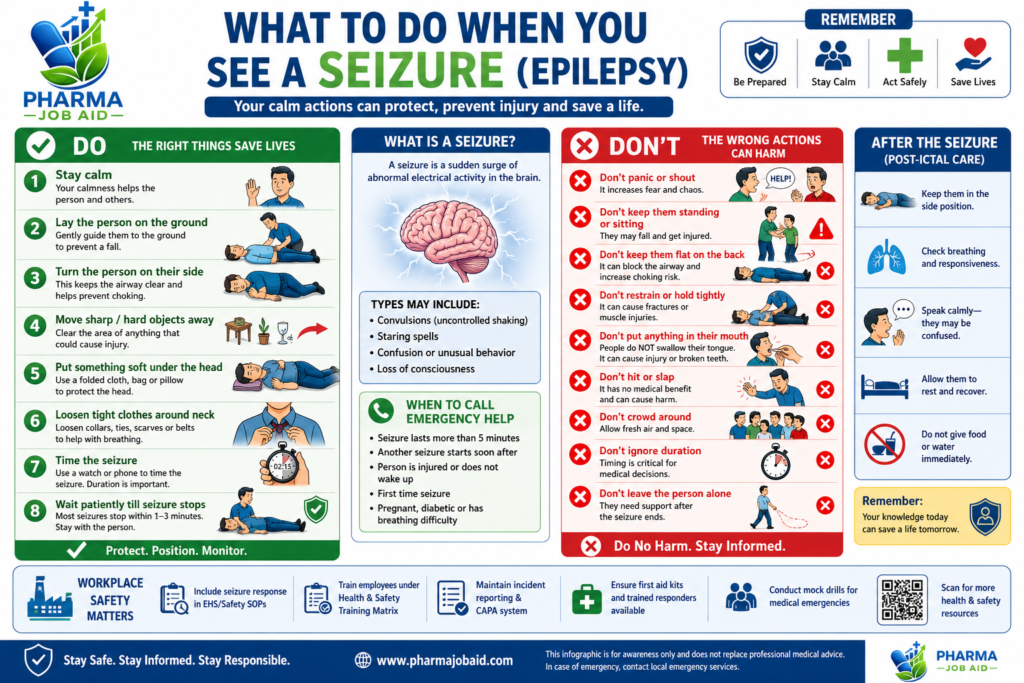
⚠️ Understanding Seizures (Epilepsy)
A seizure is a sudden surge of abnormal electrical activity in the brain. It may cause:
- Loss of consciousness
- Uncontrolled shaking (convulsions)
- Staring spells
- Confusion or unusual behavior
Epilepsy is a condition where a person has recurrent seizures, but not all seizures mean epilepsy.
✅ What You SHOULD Do During a Seizure


5
1. Stay Calm
Your reaction sets the tone. Stay composed and act quickly but gently.
2. Lay the Person on the Ground
Prevent falls and injuries by carefully guiding them to the floor.
3. Turn Them on Their Side (Recovery Position)
This helps keep the airway clear and prevents choking.
4. Remove Dangerous Objects
Clear away sharp or hard objects like furniture, tools, or glass.
5. Protect the Head
Place something soft (cloth, bag, pillow) under their head.
6. Loosen Tight Clothing
Especially around the neck (tie, scarf, collar) to ease breathing.
7. Time the Seizure
Use a watch or phone. Duration is critical for medical decisions.
8. Stay Until It Ends
Most seizures stop within 1–3 minutes. Stay with the person.
❌ What You MUST NOT Do


7
1. ❌ Don’t Panic or Shout
This increases chaos and delays proper action.
2. ❌ Don’t Keep Them Sitting or Standing
They may fall and get injured.
3. ❌ Don’t Keep Them Flat on Their Back
This increases the risk of choking.
4. ❌ Don’t Restrain or Hold Them Down
It can cause fractures or muscle injury.
5. ❌ Don’t Put Anything in Their Mouth
MYTH ALERT: People do NOT swallow their tongue.
6. ❌ Don’t Hit or Slap
This has no medical benefit.
7. ❌ Don’t Crowd Around
Allow fresh air and space.
8. ❌ Don’t Ignore the Duration
Timing is critical for emergency care.
9. ❌ Don’t Leave Them Alone
They need support after the seizure ends.
🚑 When to Call Emergency Medical Help
Call emergency services immediately if:
- Seizure lasts more than 5 minutes
- Another seizure starts soon after
- The person is injured or unconscious for long
- It is their first seizure
- The person is pregnant, diabetic, or has breathing difficulty
🩺 After the Seizure (Post-Ictal Care)
Once the seizure stops:
- Keep them in the side position
- Check breathing and responsiveness
- Speak calmly—they may be confused
- Allow them to rest
- Do not give food or water immediately
🏭 Workplace & GMP Safety Perspective (Bangladesh Pharma Context)
In pharmaceutical manufacturing (aligned with DGDA & GMP requirements):
- Include seizure response in EHS/Safety SOPs
- Train employees under Health & Safety Training Matrix
- Maintain incident reporting & CAPA system
- Ensure first aid kits and trained responders available
- Conduct mock drills for medical emergencies
📊 Key Takeaways
| Action Type | Key Message |
|---|---|
| DO | Protect, position, and monitor |
| DON’T | Restrict, panic, or interfere |
| Critical | Time the seizure |
| Emergency | Call if >5 minutes |
🔍 SEO Keywords (For PharmaJobAid)
seizure first aid, epilepsy emergency response, what to do during seizure, seizure safety workplace, DGDA safety SOP, GMP emergency response, Bangladesh health safety training
💡 Final Thought
Seizures look dramatic, but simple, correct actions can prevent serious harm. Awareness is the first step toward saving lives. Whether you are a healthcare professional, pharma employee, or general public—you can make a difference.