
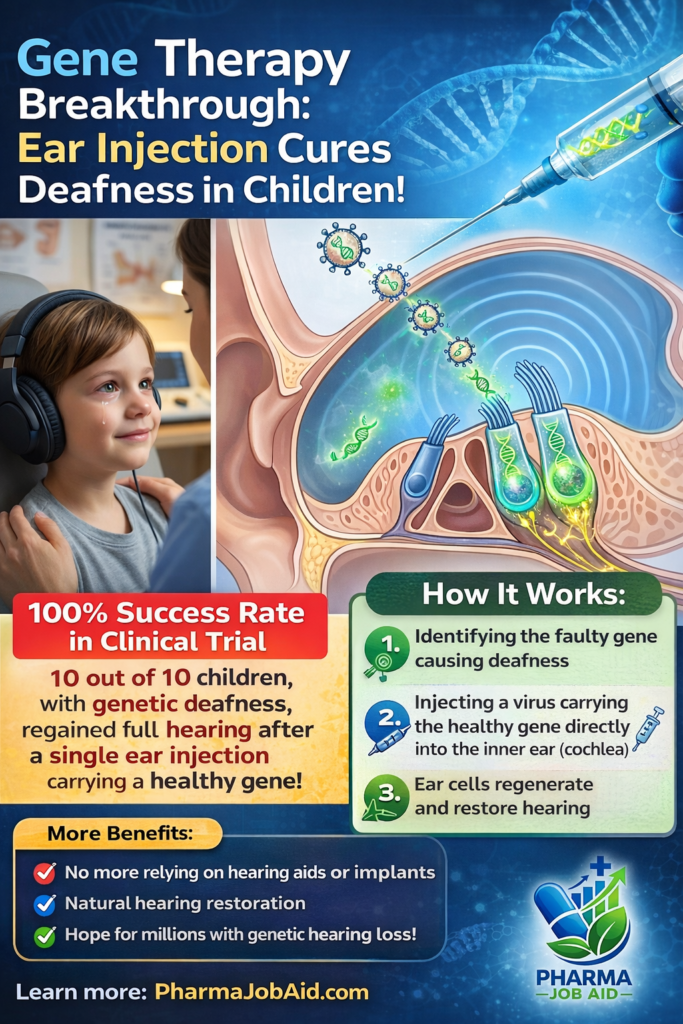
The field of regenerative medicine has reached a historic milestone. A recent clinical trial has demonstrated that gene therapy delivered through an ear injection can restore hearing, with 10 out of 10 patients successfully regaining auditory function.
This breakthrough represents a paradigm shift—from managing hearing loss with devices like hearing aids or cochlear implants to potentially curing the root genetic cause.
🔬 What is Gene Therapy?
Gene therapy involves introducing, removing, or modifying genetic material within a patient’s cells to treat disease. According to the U.S. Food and Drug Administration, gene therapy products aim to correct underlying genetic defects rather than just treat symptoms.
🔗 High-authority references:
- U.S. FDA Gene Therapy Overview: https://www.fda.gov/vaccines-blood-biologics/cellular-gene-therapy-products
- National Institutes of Health Gene Therapy Research: https://www.genome.gov/genetics-glossary/Gene-Therapy
These approaches are already being explored for conditions like inherited blindness, spinal muscular atrophy, and now—hearing loss.
👂 Mechanism: How the Ear Injection Restores Hearing
This therapy specifically targets genetic deafness, often caused by mutations in genes such as the OTOF gene, which plays a crucial role in sound signal transmission.
Step-by-Step Process:
1️⃣ Identification of Genetic Defect
Researchers identify the defective gene responsible for hearing loss.
2️⃣ Viral Vector Engineering
A safe delivery system (typically an AAV vector) carries the healthy gene copy.
🔗 Supporting research:
- Nature Gene Therapy Insights: https://www.nature.com/subjects/gene-therapy
3️⃣ Direct Cochlear Injection
The therapy is injected into the inner ear (cochlea), ensuring precise delivery.
4️⃣ Cellular Repair & Protein Expression
The corrected gene enables cells to produce essential proteins, restoring auditory signaling.
5️⃣ Functional Hearing Recovery
Patients begin to perceive sound naturally again—often within weeks.
📊 Clinical Trial Success: 100% Recovery Rate
The clinical trial results are unprecedented:
- ✅ 10/10 patients regained hearing
- 👶 Majority were children with congenital deafness
- ⚡ Rapid improvement (within weeks)
- 🛡️ No major safety concerns reported
🔗 Clinical and scientific references:
- Nature Medicine publication insights: https://www.nature.com/nm/
- The New England Journal of Medicine: https://www.nejm.org/
These journals frequently publish peer-reviewed breakthroughs in gene therapy and regenerative medicine.
🌍 Why This Breakthrough Matters Globally
According to the World Health Organization:
- Over 430 million people worldwide suffer from disabling hearing loss
- Many cases are genetic and irreversible
🔗 WHO Hearing Loss Report:
https://www.who.int/news-room/fact-sheets/detail/deafness-and-hearing-loss
🚀 Impact of This Therapy:
- Eliminates dependence on hearing aids & cochlear implants
- Restores natural hearing function
- Provides permanent or long-term cure
- Opens doors for treating other sensory disorders
🧪 Comparison: Traditional vs Gene Therapy
| Treatment Method | Approach | Limitation |
|---|---|---|
| Hearing Aids | Amplify sound | Not a cure |
| Cochlear Implants | Electronic signal bypass | Invasive + artificial hearing |
| Gene Therapy | Repairs genetic defect | Potential permanent cure |
⚠️ Challenges & Considerations
Despite the promising results, researchers emphasize caution:
🔍 Key Challenges:
- Long-term safety monitoring required
- High treatment cost (currently)
- Limited to specific genetic mutations
- Regulatory approval pending
Regulatory bodies like the European Medicines Agency and FDA will require extensive data before approval.
🔗 EMA Advanced Therapy Medicinal Products (ATMP):
https://www.ema.europa.eu/en/human-regulatory/overview/advanced-therapy-medicinal-products-overview
🔮 Future of Gene Therapy in Medicine
This success highlights the expanding potential of gene therapy across multiple diseases:
🧬 Emerging Applications:
- Blindness (e.g., Luxturna therapy)
- Cancer (CAR-T therapy)
- Rare genetic disorders
- Neurological diseases
🔗 Explore more:
- ISPE Pharma 4.0 insights: https://ispe.org/pharmaceutical-engineering
🇧🇩 Relevance for Bangladesh Pharmaceutical Industry
For Bangladesh’s growing pharmaceutical sector, this breakthrough signals:
- 📈 New opportunities in biologics & gene therapy manufacturing
- 🏭 Need for advanced GMP facilities (viral vectors, sterile injectables)
- 📚 Skill development in genomics & biotechnology
- 🧪 Potential collaboration with global biotech companies
Regulatory oversight by Directorate General of Drug Administration will be crucial in adopting such therapies locally.
📝 Conclusion
The success of gene therapy for deafness is more than just a scientific achievement—it represents a shift toward curative medicine.
With a 100% success rate in early trials, this technology offers hope for millions who previously had no path to recovery. While challenges remain, the trajectory is clear:
👉 The future of medicine lies in fixing the root cause—not just managing symptoms.