
Introduction
Bangladesh’s pharmaceutical industry has experienced remarkable growth over the past two decades, evolving into a nearly self-sufficient sector that meets approximately 97% of domestic demand. Yet, beneath this success lies a striking and persistent trend—gastric medicines continue to dominate overall drug sales.
Despite the rise of newer therapeutic categories such as allergy drugs and diabetes treatments, anti-ulcerants and acid-suppressing medicines remain at the top of the market hierarchy. This dominance is not coincidental. It reflects deep-rooted dietary habits, widespread digestive disorders, lifestyle patterns, and systemic healthcare behaviors in Bangladesh.
In this comprehensive analysis, we explore why gastric medicines continue to lead the pharmaceutical market, what it reveals about public health, and what it means for the future of the industry.
For more pharmaceutical insights and career opportunities, visit 👉 https://pharmajobaid.com/
The Market Reality: Gastric Drugs at the Top
Recent data from industry sources such as IQVIA and national business reports clearly demonstrate that gastric medicines dominate both prescription and over-the-counter segments in Bangladesh.
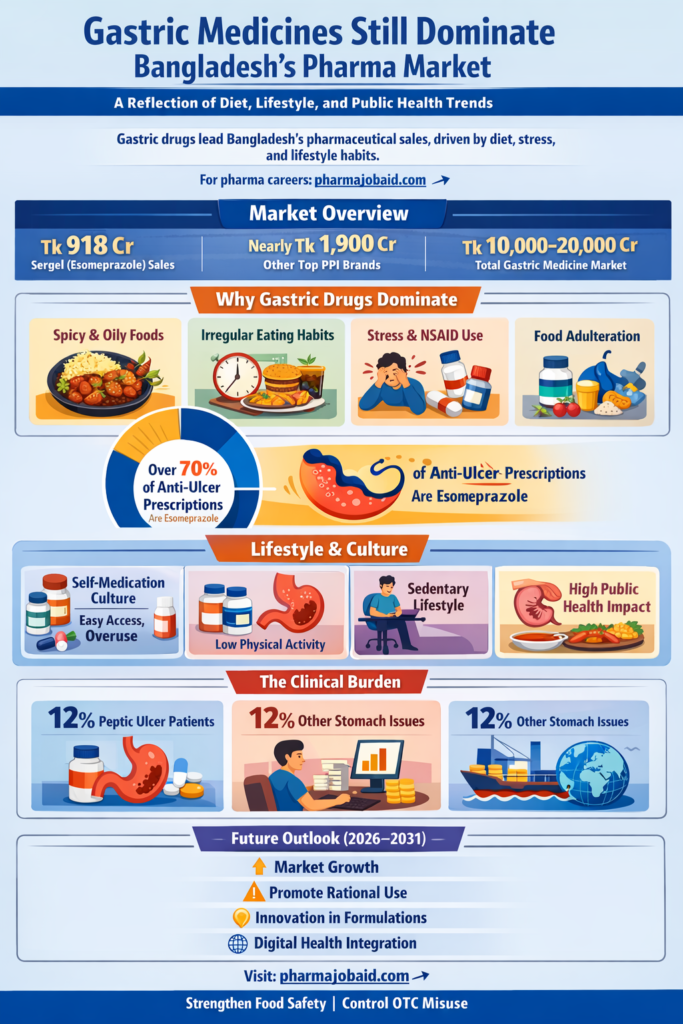
- The top-selling drug Sergel (esomeprazole) alone generated around Tk 918 crore in sales
- Other leading brands like Maxpro and Pantonix collectively contributed nearly Tk 1,900 crore
- Multiple gastric-related brands consistently appear in the top 10 best-selling medicines list
Even more striking:
- The total gastric medicine market is estimated between Tk 10,000–20,000 crore annually
This means a massive portion of Bangladesh’s pharmaceutical revenue is driven by digestive health-related drugs, far exceeding many other therapeutic segments.
Understanding Gastric Medicines: What Are They?
Gastric medicines primarily include:
- Proton Pump Inhibitors (PPIs) – e.g., esomeprazole, omeprazole
- H2 receptor blockers – e.g., ranitidine
- Antacids
- Mucosal protective agents
Among these, PPIs dominate prescriptions. Studies show:
- Esomeprazole accounts for over 70% of anti-ulcer prescriptions in Bangladesh
These drugs work by:
- Reducing stomach acid production
- Healing ulcers
- Treating GERD (acid reflux)
- Preventing NSAID-induced gastric damage
Their effectiveness, affordability, and widespread availability make them a first-line treatment in both hospitals and community pharmacies.
Dietary Habits: The Core Driver
1. Spicy and Oil-Rich Foods
Bangladeshi cuisine is rich in spices, oils, and fried items. While flavorful, these foods:
- Increase gastric acid secretion
- Irritate the stomach lining
- Trigger chronic acidity
Experts confirm that:
“People prefer very spicy foods… causing gastric problems and high medicine demand.”
2. Irregular Eating Patterns
Urbanization and work pressure have led to:
- Skipping meals
- Late-night eating
- Heavy meals after long fasting
These habits disrupt digestion and significantly contribute to:
- Acid reflux
- Gastritis
- Functional dyspepsia
Food Safety and Adulteration
Another major contributor is food adulteration, a persistent issue in Bangladesh.
Contaminated food containing:
- Harmful chemicals
- Artificial preservatives
- Poor-quality oil
can lead to:
- Chronic stomach irritation
- Ulcers
- Long-term gastrointestinal disorders
Industry experts highlight that:
“Food adulteration and compromised ingredients have made acidity-related conditions extremely common.”
This explains why gastric medicine consumption remains consistently high across all demographics.
Lifestyle Factors Amplifying the Problem
1. Stress and Urban Living
Chronic stress is directly linked to:
- Increased acid production
- Irritable bowel symptoms
- Digestive dysfunction
With rapid urbanization in cities like Dhaka and Chattogram, stress-induced gastric issues are rising.
2. NSAID Overuse
Painkillers such as diclofenac and ibuprofen are widely used without prescription.
- Around 36% of anti-ulcer prescriptions are linked to NSAID-induced acidity
Doctors often prescribe PPIs alongside these drugs as a preventive measure.
3. Sedentary Lifestyle
Reduced physical activity contributes to:
- Slower metabolism
- Poor digestion
- Increased obesity-related reflux
Cultural and Behavioral Patterns
1. Self-Medication Culture
In Bangladesh:
- Many people buy medicines without consulting doctors
- Pharmacies often act as primary healthcare providers
Gastric drugs are:
- Cheap
- Easily available
- Considered “safe”
This leads to overuse and dependency.
2. Preventive Use
It is common for patients to take gastric medicine:
- Before eating spicy food
- Alongside antibiotics or painkillers
- Without confirmed diagnosis
This habit further inflates market demand.
Clinical Burden of Gastric Diseases
The high consumption of gastric medicines reflects a significant disease burden:
- Around 12% of the population suffers from peptic ulcers
- Another 12% have other stomach-related diseases
Additionally:
- A large percentage of patients require gastric drugs as supportive therapy
Conditions commonly treated include:
- GERD
- Peptic ulcer disease
- Gastritis
- H. pylori infection
Pharmaceutical Industry Perspective
1. Highly Competitive Segment
Almost every pharmaceutical company in Bangladesh has:
- Multiple PPI brands
- Combination gastric formulations
- Antacid variants
This creates:
- Intense competition
- Aggressive marketing
- Brand differentiation strategies
2. Revenue Stability
Gastric drugs provide:
- Consistent demand
- High volume sales
- Predictable revenue streams
Unlike specialized drugs, gastric medicines:
- Are used daily
- Have repeat consumption
- Are less affected by economic downturns
3. Export Potential
Bangladesh exports generic PPIs globally, benefiting from:
- Cost-effective production
- Strong manufacturing base
- TRIPS flexibility (until LDC graduation)
Why Gastric Drugs Outperform Other Categories
Even though allergy drugs are currently the fastest-growing segment, gastric drugs remain dominant because:
| Factor | Impact |
|---|---|
| Daily consumption | High repeat sales |
| OTC availability | Easy access |
| Lifestyle diseases | Increasing prevalence |
| Preventive use | Expands market |
| Low cost | Mass affordability |
Public Health Implications
The dominance of gastric medicines is both:
✔ A Market Opportunity
AND
⚠ A Public Health Warning
It signals:
- Poor dietary habits
- Weak food safety enforcement
- Over-medication culture
- Lack of preventive healthcare awareness
Risks of Overuse
While PPIs are effective, long-term misuse may lead to:
- Nutrient deficiencies (Vitamin B12, Magnesium)
- Increased risk of infections
- Kidney complications
Globally, concerns about PPI overuse are rising, and Bangladesh is no exception.
Future Outlook (2026–2031)
1. Continued Market Dominance
Gastric medicines will likely:
- Remain the top-selling therapeutic category
- Grow steadily with population and urbanization
2. Shift Toward Rational Use
Regulators and healthcare providers may:
- Promote prescription control
- Increase awareness about overuse
3. Innovation in Formulations
Pharma companies are expected to introduce:
- Combination therapies
- Extended-release formulations
- Improved patient compliance products
4. Digital Health Integration
Telemedicine and digital prescriptions may:
- Reduce self-medication
- Improve diagnosis accuracy
Opportunities for Pharma Professionals
For job seekers and professionals, this segment offers:
- Strong demand for medical representatives
- Growth in product management roles
- Opportunities in regulatory affairs and pharmacovigilance
Explore career opportunities in the pharmaceutical sector at 👉 https://pharmajobaid.com/
Strategic Recommendations
For Policymakers:
- Strengthen food safety regulations
- Control OTC drug misuse
- Promote public health campaigns
For Pharma Companies:
- Focus on patient education
- Invest in safer formulations
- Build ethical marketing strategies
For Healthcare Professionals:
- Avoid unnecessary prescriptions
- Educate patients on lifestyle changes
Conclusion
The dominance of gastric medicines in Bangladesh is not just a pharmaceutical trend—it is a mirror reflecting the nation’s dietary culture, healthcare behavior, and lifestyle challenges.
From spicy foods and irregular meals to stress and self-medication, multiple factors converge to create a high demand for digestive health solutions. While this presents immense opportunities for the pharmaceutical industry, it also raises critical concerns about long-term public health.
Addressing this issue requires a multi-dimensional approach involving:
- Better awareness
- Stronger regulation
- Healthier lifestyle choices
Until then, gastric medicines will continue to lead the charts—serving as both a solution and a symptom of a deeper health challenge.
🔗 About PharmaJobAid
PharmaJobAid is Bangladesh’s emerging platform for pharmaceutical careers, industry insights, and professional development.
👉 Visit now: https://pharmajobaid.com/