
The skin acts as the barrier organ protecting the body from any threats from the environment, infections, and physical harm. However, there are many conditions that may affect the skin at any age, and lead to symptoms from mere discomfort to serious issues requiring immediate treatment to avoid further complications. This article discusses ten most common skin diseases, their features, and approaches to treating them effectively.
The skin acts as the largest organ of the body, protecting us from the external environment. Nevertheless, it is also prone to irritation, infections, or autoimmune attacks. Understanding unusual rashes, bumps, or patches can be quite difficult.
Here is a detailed list of the top 10 common skin problems in order to understand your condition better. These are discussed with the help of an educational dermatology.
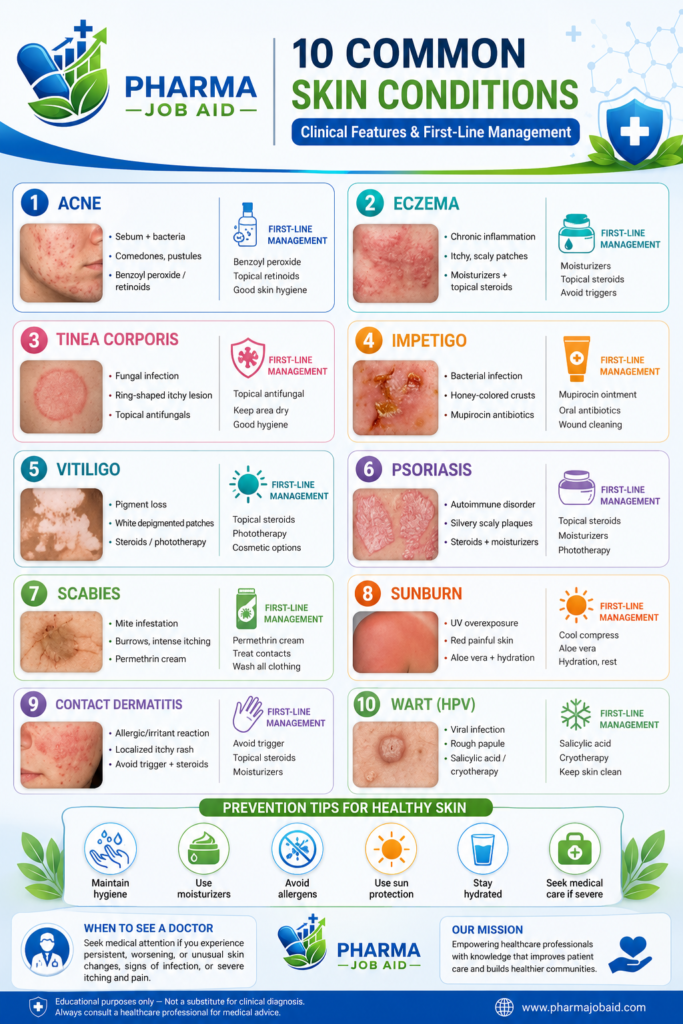
Acne
Acne vulgaris is one of the commonest skin diseases worldwide, especially in teenagers and young adults. The condition develops as a result of blockage of hair follicles with sebum, dead skin cells, and bacteria. Blackheads, whiteheads, papules, pustules, and nodules or cysts in severe cases are the clinical features associated with acne. The condition usually affects the face, chest, shoulders, and back. Common treatments for acne include the use of topical benzoyl peroxide, retinoids, and salicylic acid.
Eczema: Chronic Skin Inflammation and Itching
Also known as atopic dermatitis, eczema is a skin disorder that involves chronic skin inflammation, leading to dryness, itching, and irritation. The disease usually flares up due to exposure to allergens, irritants, stressful situations, or environmental factors. The typical manifestation of eczema includes red and scaly rashes localized in such areas as face, hands, elbows, and knees. The treatment of eczema entails the restoration of the skin barrier function using moisturizers and reducing the inflammatory processes with corticosteroids.
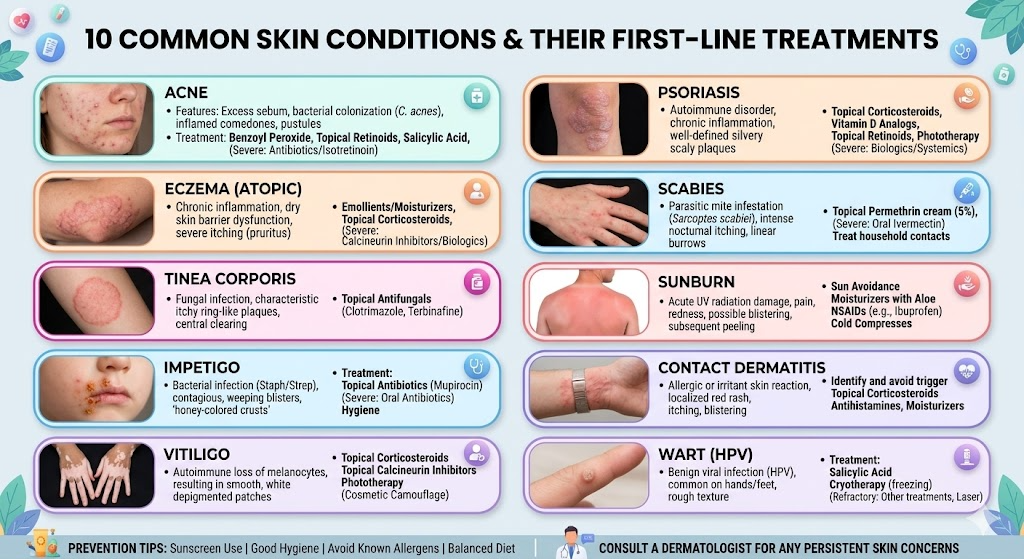
Ringworm (Tinea Corporis): A Common Fungal Infection
Although the name suggests otherwise, ringworm does not involve any worm; it is, in fact, a fungal infection of the skin, called tinea corporis. As the name of the disorder indicates, it usually manifests as a circular rash with a clear center and raised reddish edges. Ringworm is accompanied by itching and can increase in size if left untreated. The treatment of ringworm includes applying topical antifungals.
Vitiligo: Loss of Skin Pigmentation
Vitiligo is an immune-mediated condition resulting in the damage to cells that produce pigment in the skin. Hence, patients experience depigmentation or the formation of white patches all over the body. It is not communicable nor does it cause any harm. However, it could affect the emotional well-being of individuals, thus affecting their self-image. Treatment options for vitiligo include corticosteroids, calcineurin inhibitors, phototherapy, and camouflage techniques.
Psoriasis: An Autoimmune Disease of the Skin
Psoriasis is an autoimmune chronic disease marked by the quick production of skin cells. In this disorder, patients develop red spots on their bodies, which are usually covered with silver scales. This disease is often found on areas like the elbows, knees, head and lower back. Psoriasis can also occur on nails and joints of the body. The initial treatment includes the use of creams like corticosteroids and moisturizers. Phototherapy and systemic drugs can be used when it is moderate to severe.
Scabies: Infestation with Skin Mites
The condition of scabies results from infestation with mites called Sarcoptes scabiei. The mites burrow into the skin, causing severe itching, especially during the night. Burrows and tiny bumps can be noticed, especially between fingers and wrists. Cream with permethrin is used for the treatment as the primary drug of choice. Contacts within a household must receive treatment at the same time.
Unburn: Damage Caused by Ultraviolet Rays
Sunburn develops due to overexposure to ultraviolet (UV) rays from natural sunlight or artificial tanning lamps. Some symptoms associated with the condition are redness, pain, warmth, swelling, and even blister formation. The recurrence of sunburn increases chances of skin aging and cancer development. Sunburn treatment includes skin cooling, adequate hydration, aloe vera-containing treatments, and protection from sunlight.
Contact Dermatitis: Inflammation Due to Exposure to Certain Substances
Contact dermatitis is a skin inflammation reaction caused by exposure to an irritant or an allergen. Such substances may be soaps, detergents, personal care products, fragrances, metallic elements, and certain chemicals used at work. Symptoms associated with the condition include erythema, itching, edema, and rash formation. Key to management is avoidance of the causative agent alongside treatment with topical corticosteroids and moisturizing treatments.
Warts (HPV)
Also called papillomas, warts represent benign skin tumours caused by HPV. Usually, these skin formations occur in the form of papules that can be found on hands, fingers, soles, and other parts of the body. Most warts disappear without treatment; however, their removal is needed in case of cosmetic issues or associated discomfort. Salicylic acid products and cryotherapy serve as effective methods to eliminate infected tissue.
Important Points on the Care of Your Skin
Skin problems can frequently be avoided by developing good skincare practices. Good personal hygiene, application of moisturisers, avoidance of allergens, protection of the skin from too much sunlight, and maintaining hydration levels in your body can go a long way in ensuring that you are free from a host of skin-related issues.
When to See a Doctor
There are many cases where your skin problem can be easily addressed with home remedies and proper skincare techniques. However, there are times when you need to consult a doctor to avoid making your condition even worse.
5 General Prevention and Care Tips for Healthy Skin
While treatments vary widely for each specific condition, practising baseline skin health habits can prevent many common irritations and infections. As highlighted at the bottom of, Remember these core pillars of skin care:
- Maintain Hygiene: Wash regularly to eliminate harmful bacteria, fungi, and excess oils.
- Use Moisturizers: Keep the skin barrier hydrated and intact to prevent cracks and allergen penetration.
- Avoid Allergens: Pay attention to what triggers your skin flare-ups and adjust your environment or products accordingly.
- Sun Protection: Wear broad-spectrum sunscreen daily to prevent acute sunburns and long-term UV damage.
- Seek Medical Care if Severe: Never rely purely on self-diagnosis. If a rash spreads rapidly, becomes intensely painful, or shows signs of severe infection, consult a board-certified dermatologist.
Disclaimer: This article and the accompanying infographic are for educational purposes only. They are not a substitute for clinical diagnosis or professional medical advice. Always consult a healthcare professional for persistent skin issues.