
Skin care is not just cosmetic—it is an essential part of healthcare, dermatological therapy, and pharmaceutical practice. In both community pharmacy and hospital settings, topical creams play a crucial role in treating common skin conditions such as infections, inflammation, dryness, and wounds.
This article explores the Top 5 Essential Creams, their mechanism of action, uses, regulatory considerations (GMP/DGDA perspective), and practical guidance for pharmaceutical professionals and job seekers.
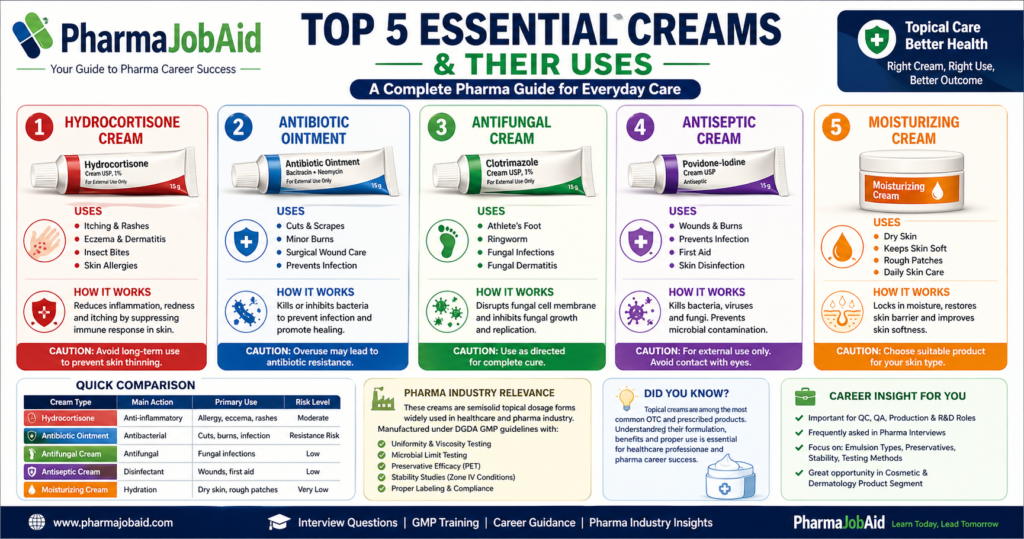
🔬 1. Hydrocortisone Cream (Topical Corticosteroid)

5
📌 What is it?
Hydrocortisone is a mild topical corticosteroid used to reduce inflammation, redness, and itching in skin conditions.
💊 Common Uses:
- Eczema & dermatitis
- Insect bites
- Allergic skin reactions
- Mild psoriasis
- Itching & rashes
⚙️ Mechanism of Action:
- Suppresses inflammatory mediators
- Reduces immune response in skin
- Decreases swelling and irritation
⚠️ GMP/Regulatory Note (DGDA Style):
- Should not be used on infected wounds without antimicrobial support
- Controlled use duration required to avoid skin thinning (atrophy)
- Must follow label claim & approved indications
🧫 2. Antibiotic Ointment

5
📌 What is it?
Topical antibiotics (e.g., Neomycin, Bacitracin, Mupirocin) are used to prevent or treat bacterial infections.
💊 Common Uses:
- Cuts & abrasions
- Minor burns
- Surgical wound protection
- Infection prevention
⚙️ Mechanism:
- Kills or inhibits bacterial growth
- Prevents contamination of open wounds
⚠️ GMP Insight:
- Overuse may lead to antibiotic resistance
- Should be used as per prescription or OTC guideline
- Stability & contamination control critical in manufacturing
🍄 3. Antifungal Cream

6
📌 What is it?
Antifungal creams (e.g., Clotrimazole, Ketoconazole, Miconazole) treat infections caused by fungi.
💊 Common Uses:
- Athlete’s foot
- Ringworm
- Candida infections
- Fungal dermatitis
⚙️ Mechanism:
- Disrupts fungal cell membrane
- Inhibits fungal growth and replication
⚠️ GMP Note:
- Requires microbial limit testing
- Proper labeling for indication-specific use
- Must ensure uniform drug distribution in base
🧪 4. Antiseptic Cream

5
📌 What is it?
Antiseptic creams contain agents like Chlorhexidine, Povidone-Iodine to prevent infection.
💊 Common Uses:
- Wounds & burns
- First aid treatment
- Skin disinfection
- Minor injuries
⚙️ Mechanism:
- Kills bacteria, viruses, and fungi
- Prevents microbial contamination
⚠️ Regulatory Perspective:
- Classified under OTC/first aid products
- Requires strict microbial efficacy testing
- Stability under different storage conditions must be validated
💧 5. Moisturizing Cream (Emollients)

7
📌 What is it?
Moisturizers (emollients) maintain skin hydration and protect the skin barrier.
💊 Common Uses:
- Dry skin (xerosis)
- Cracked skin
- Rough patches
- Daily skin care
⚙️ Mechanism:
- Retains moisture (occlusive effect)
- Restores skin barrier function
- Improves skin elasticity
⚠️ GMP Consideration:
- Cosmetic vs pharmaceutical classification
- Requires preservative efficacy testing (PET)
- Stability against microbial contamination is critical
📊 Comparative Overview (Quick Pharma Guide)
| Cream Type | Main Action | Primary Use | Risk Level |
|---|---|---|---|
| Hydrocortisone | Anti-inflammatory | Allergy, eczema | Moderate (long-term risk) |
| Antibiotic | Antibacterial | Cuts, burns | Resistance risk |
| Antifungal | Antifungal | Fungal infections | Low |
| Antiseptic | Disinfectant | Wounds | Low |
| Moisturizer | Hydration | Dry skin | Very low |
🏭 Pharmaceutical Industry Relevance (Bangladesh Context)
In Bangladesh’s pharmaceutical sector:
- These creams fall under topical dosage forms (semisolid preparations)
- Must comply with DGDA GMP guidelines
- Require:
- Uniformity testing
- Viscosity control
- Microbial limit testing
- Stability studies (Zone IV conditions)
💡 For PharmaJobAid users:
These products are commonly asked topics in:
- QC interviews (semisolid testing)
- Production (cream manufacturing process)
- QA (validation & stability studies)
🎯 Career Insight for PharmaJobAid Users
If you’re preparing for pharma jobs:
👉 Focus on:
- Cream vs ointment vs gel differences
- Emulsion types (O/W vs W/O)
- Preservative systems
- Stability challenges in tropical climates (Bangladesh)
🔚 Conclusion
Understanding these Top 5 Essential Creams is fundamental for both healthcare professionals and pharmaceutical job seekers. From treating everyday skin issues to mastering GMP compliance, these topical formulations are a cornerstone of the pharmaceutical industry.